Postpartum Skincare Routine: Healing Your Skin After Baby
Your skin undergoes significant changes postpartum, but you can address common concerns like melasma, acne, and dryness with a simple, targeted skincare routine. Learn how to build an effective 5-minute daily regimen to support your skin's healing.
- Identify common postpartum skin issues like melasma, acne, dryness, and dullness.
- Implement a minimalist 5-minute routine: AM cleanse, Vit C, SPF; PM double cleanse, serum, night cream.
- Essential products include a gentle cleanser, Vitamin C serum, hyaluronic acid, and SPF moisturizer.
- Combat melasma with daily SPF and Vitamin C; treat postpartum acne with gentle cleansing.
- Hydrate dry skin using hyaluronic acid, rich moisturizers, and ample water intake.
Your skin just went through a lot. Pregnancy hormones, sleepless nights, possible dehydration from breastfeeding, and the general chaos of new motherhood have probably left your skin looking and feeling different than before. Welcome to postpartum skin—it’s complicated, but it’s also temporary.
The good news? With a simple, targeted routine, you can address the most common postpartum skin concerns while respecting the reality that you have about 30 seconds to spend on your face right now.
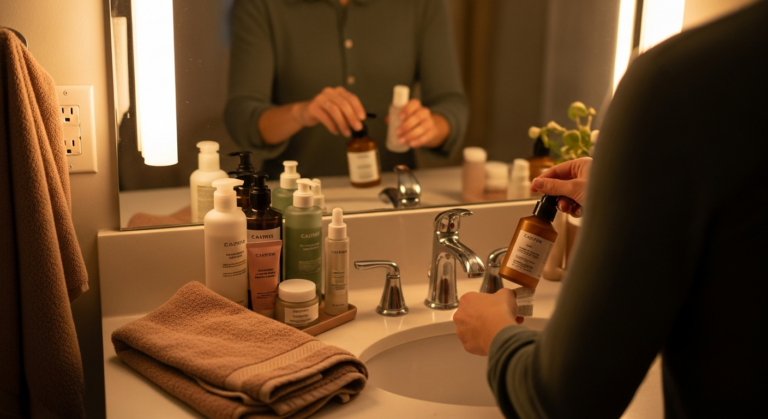
[IMAGE: New mom with glowing skin doing simple skincare routine]
Understanding Postpartum Skin
Your skin after baby is influenced by several factors:
Hormonal shifts: Estrogen and progesterone drop dramatically after delivery, affecting skin hydration, oil production, and healing.
Sleep deprivation: Chronic sleep loss impairs skin barrier function, increases inflammation, and accelerates aging.
Dehydration: Especially common if breastfeeding. Dehydrated skin looks dull and tired.
Stress: Cortisol affects skin health, contributing to breakouts and sensitivity.
Time constraints: When you can’t maintain a routine, skin suffers from neglect.
This isn’t about achieving perfection—it’s about supporting your skin through a transition period with minimal effort.
Common Postpartum Skin Concerns
Melasma (Pregnancy Mask)
Brown or gray-brown patches, typically on forehead, cheeks, and upper lip. Caused by hormonal changes during pregnancy.
What helps:
- Daily SPF (essential!)
- Vitamin C serum
- Gentle exfoliation
- Time (often fades after hormones stabilize)
What to avoid:
- Picking or harsh treatments
- Unprotected sun exposure
Postpartum Acne
Hormonal fluctuations can trigger breakouts, even if you never had acne before.
What helps:
- Gentle cleanser (avoid stripping oils)
- Salicylic acid (check breastfeeding safety)
- Non-comedogenic moisturizer
- Patience (hormones need time to balance)
What to avoid:
- Over-cleansing
- Harsh, drying treatments
- Picking at breakouts
Dryness and Dehydration
Extremely common, especially while breastfeeding.
What helps:
- Hyaluronic acid serum
- Rich moisturizer
- Drinking lots of water
- Overnight masks
What to avoid:
- Hot water on face
- Harsh cleansers
- Skipping moisturizer
Dull, Tired Skin
From lack of sleep, dehydration, and general exhaustion.
What helps:
- Vitamin C serum (brightening)
- Gentle exfoliation (1-2x weekly)
- Hydrating products
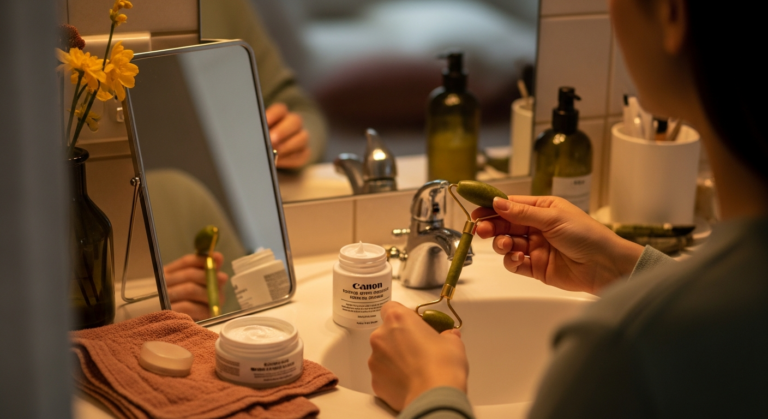
- Facial massage for circulation
5-Minute Self-Care Ideas for Busy Moms
The Minimalist Postpartum Skincare Routine
For the days (most days?) when you have almost no time.
Morning: 2 Minutes
- Splash with water or gentle cleanser if needed
- Vitamin C serum (brightening, antioxidant protection)
- Moisturizer with SPF (non-negotiable, especially for melasma)
That’s it. Three steps, 2 minutes.
Evening: 3 Minutes
- Double cleanse (oil-based cleanser to remove the day, then gentle water-based cleanser)
- Treatment serum (hyaluronic acid for hydration, or targeted treatment for concerns)
- Night cream or facial oil (richer than morning moisturizer)
If even this feels like too much, simplify to: cleanse, moisturize.
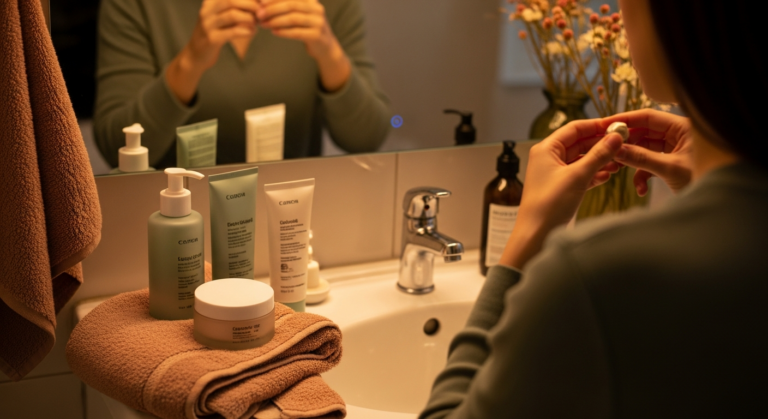
[IMAGE: Simple skincare products lined up on bathroom counter]
Building Your Postpartum Skincare Kit
Cleanser
Choose: Gentle, hydrating formula that doesn’t strip
Avoid: Foaming cleansers that leave skin tight, harsh acne cleansers
Good options:
- CeraVe Hydrating Cleanser (~$15)
- La Roche-Posay Toleriane (~$15)
- Vanicream Gentle Facial Cleanser (~$10)
Vitamin C Serum
Why: Brightens dull skin, helps with hyperpigmentation (melasma), antioxidant protection
When: Morning, before moisturizer
Good options:
- Timeless Vitamin C+E+Ferulic (~$25)
- CeraVe Vitamin C Serum (~$20)
- The Ordinary Vitamin C Suspension (~$7)
Hyaluronic Acid
Why: Deep hydration, plumps skin, helps with dryness
When: Apply to damp skin for best absorption
Good options:
- The Ordinary Hyaluronic Acid (~$9)
- CeraVe Hyaluronic Acid Serum (~$18)
- Neutrogena Hydro Boost Serum (~$20)
Moisturizer
Why: Locks in hydration, protects skin barrier
Choose: Richer formulas for postpartum dryness
Good options:
- CeraVe Moisturizing Cream (~$17)
- La Roche-Posay Cicaplast Baume (~$17)
- Vanicream Moisturizing Cream (~$15)
SPF
Why: Non-negotiable! Prevents melasma from worsening, protects healing skin
Choose: At least SPF 30, broad spectrum
Good options:
- EltaMD UV Clear (~$40)
- La Roche-Posay Anthelios (~$35)
- CeraVe Moisturizing Lotion with SPF 30 (~$17)
[SHOP THE LOOK – Budget Routine]
- CeraVe Hydrating Cleanser: $15
- The Ordinary Hyaluronic Acid: $9
- The Ordinary Vitamin C: $7
- CeraVe Moisturizing Cream: $17
- CeraVe AM Facial Lotion SPF 30: $17
Total: ~$65
Breastfeeding-Safe Skincare Considerations
If you’re nursing, some ingredients warrant caution:
Generally considered safe:
- Hyaluronic acid
- Vitamin C
- Glycolic acid (low percentages)
- Niacinamide
- Most moisturizers and cleansers
Use with caution / consult doctor:
- Retinoids (often avoided during breastfeeding)
- Salicylic acid (low percentages likely fine, but check with provider)
- High-concentration glycolic/AHA treatments
Generally avoided:
- Prescription retinoids (tretinoin)
- Hydroquinone
- High-dose salicylic acid
Always consult your healthcare provider about specific products if you’re breastfeeding.
Weekly Treatments (When You Have Time)
Exfoliation
Once or twice weekly to remove dead skin and brighten complexion.
Options:
- Glycolic acid toner or pads
- Gentle physical scrub
- Enzyme mask
Face Mask
Once weekly for extra hydration or treatment.
For dry skin: Sheet masks, hydrating masks
For dull skin: Brightening masks with vitamin C or niacinamide
For acne: Clay masks (use sparingly to avoid drying)
Facial Massage
Whenever you apply products or as a standalone treat.
Benefits:
- Increases circulation (hello, glow!)
- Reduces puffiness
- Moment of self-care
- Helps products absorb
Budget Skincare Routine That Actually Works
Postpartum Skincare Timeline
0-6 Weeks Postpartum
Focus: Basic, gentle routine only
Priority: Cleansing and moisturizing
Avoid: New products, actives, anything irritating
Reality: You’re surviving. Splashing water on your face counts.
6 Weeks – 3 Months
Focus: Reintroduce routine
Priority: Hydration, SPF (especially for melasma)
Can add: Vitamin C, hyaluronic acid
Reality: You might have slightly more time and energy
3-6 Months
Focus: Address specific concerns
Priority: Whatever bothers you most
Can add: Gentle exfoliation, treatments for acne/pigmentation
Reality: Routine becomes more sustainable
6-12 Months
Focus: Maintenance and optimization
Priority: Continued protection (SPF) and hydration
Can add: Stronger treatments if desired
Reality: Hormones stabilizing, routine more established
Quick Skincare Wins
When even the minimal routine feels like too much:
- Sleep with a humidifier (hydrates while you sleep)
- Drink more water (hydration from within)
- Apply moisturizer immediately after washing (locks in hydration)
- Keep products by the bed (nighttime routine happens even when you’re exhausted)
- Choose multitaskers (SPF moisturizer, tinted products with skincare benefits)
FAQ
When will my skin go back to normal?
Most postpartum skin changes improve within 6-12 months as hormones stabilize. Some changes (like melasma) may take longer or require targeted treatment.
Can I use retinol while breastfeeding?
Retinoids are generally avoided during breastfeeding out of caution, though topical absorption is low. Consult your doctor. Alternatives like bakuchiol offer similar benefits with less concern.
My skin is worse now than during pregnancy. Is that normal?
Yes! Many women experience more skin issues postpartum due to the dramatic hormone drop. It’s frustrating but temporary.
I don’t have time for skincare. What’s the one thing I should do?
Moisturize. Keeping your skin barrier healthy prevents many other issues. If you can do one more thing, add SPF.
Conclusion
Postpartum skincare isn’t about achieving perfection—it’s about supporting your skin through a major transition with as little effort as possible. A gentle cleanser, good moisturizer, and SPF cover most bases. Everything else is bonus.
Be patient with your skin (and yourself). Hormones need time to balance, sleep needs time to improve, and skin needs time to heal. Show up for your skin when you can, and forgive yourself when you can’t.
You’re doing great, mama.
Night Skincare Routine for Tired Moms: 5 Minutes or Less
—