Building a Mom Wardrobe on a Budget
Learn how to build a functional and budget-friendly mom wardrobe by first auditing your current closet and then strategically shopping for versatile, affordable pieces that make you feel good without financial guilt.
- Conduct a ruthless closet audit to identify what fits and what to let go.
- Create a strategic shopping list to fill gaps with versatile, budget-friendly items.
- Prioritize 12 key pieces like leggings, jeans, tees, and a cardigan under $200.
- Focus on mix-and-match items that transition from playground to casual outings.
You’re standing in front of your closet at 7:14 a.m. with a baby on your hip and a preschooler yelling about frozen waffles, and nothing fits. Not figuratively — literally nothing fits. The pre-pregnancy jeans mock you from the top shelf. The maternity clothes are too big. The nursing-friendly tops are stained in places you don’t want to examine closely. And your budget says “$0 for new clothes this month” in a font that feels personally offensive.
Building a wardrobe that fits your postpartum body, your mom lifestyle, and your actual bank account isn’t about Pinterest-worthy capsule closets or $200 “investment pieces.” It’s about being strategic, getting creative, and giving yourself permission to dress in a way that makes you feel human again — without the financial guilt.
The Honest Budget Audit: What Do You Actually Have?
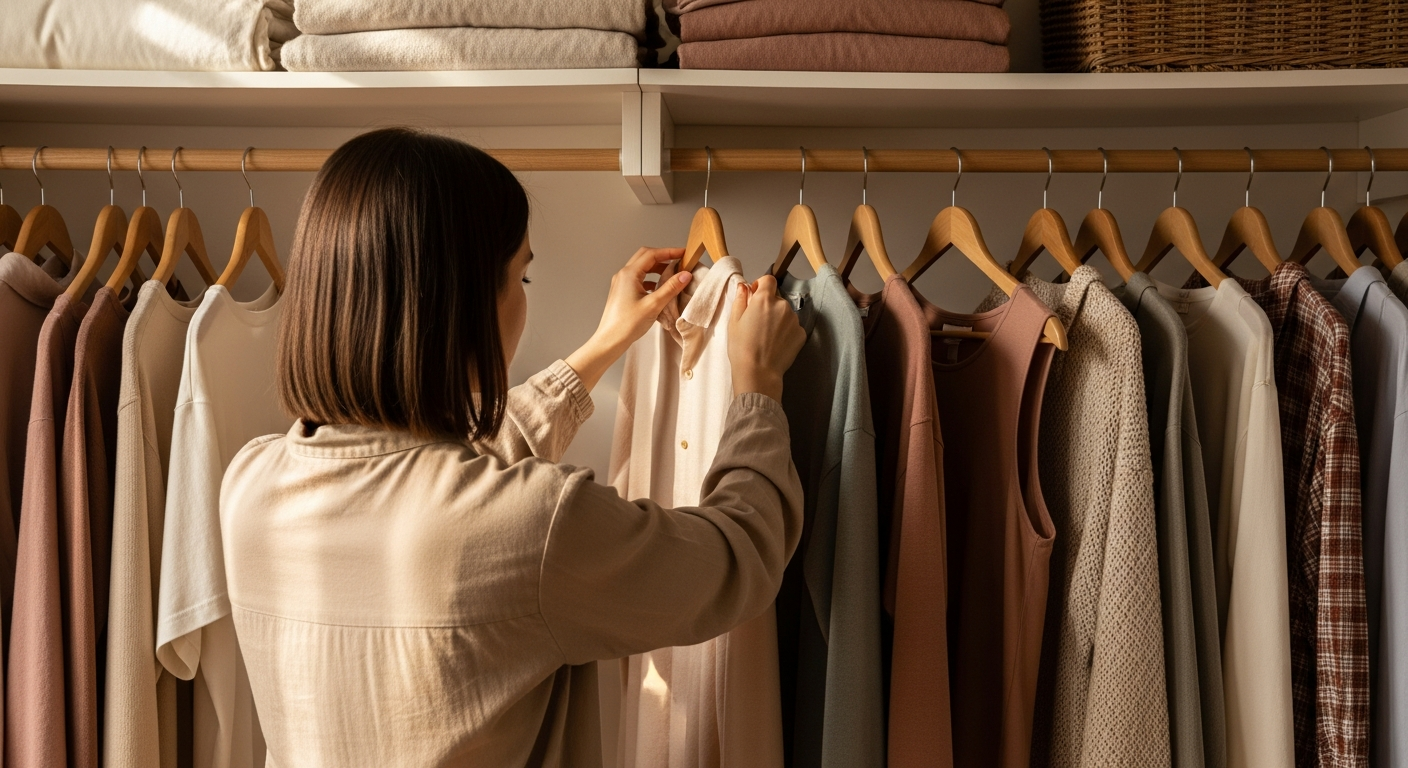
Before you spend a single dollar, you need to know what’s already in your closet that works — and be ruthless about what doesn’t. Block out 30 minutes during nap time and do a real inventory. Pull everything out. Try it on. And sort into four piles:
- Fits and I feel good in it: These are your keepers. Hang them front and center where you can grab them easily.
- Fits but needs updating: Maybe it’s a decent pair of jeans that needs hemming, or a top that would work with a different bra. Minor fixes can save you from buying new.
- Doesn’t fit right now: Box these up and store them out of sight. Don’t throw them away if your body is still changing, but stop staring at them every morning. They’re just fabric — not a report card on your recovery.
- Stained, pilled, stretched out, or makes you feel terrible: Donate pile. Let it go. That ratty nursing tank from 2023 has served its purpose.
Most moms discover they have maybe 5-8 pieces that actually work for their current body and life. That’s your starting point. Now you know exactly what gaps to fill — and you won’t waste money duplicating things you already own.
The Strategic Shopping List: 12 Pieces Under $200
You don’t need a massive wardrobe. You need the right pieces that mix and match, survive the washing machine, and transition from playground to grocery store to casual lunch without a full outfit change. Here’s a complete budget shopping list:
Bottoms ($50-$60 total):
- One pair of black leggings ($12-$18): Not see-through, high-waisted, and thick enough to wear as pants. Amazon Essentials and 90 Degree by Reflex consistently get top reviews under $20.
- One pair of jeans ($15-$25): Mid-rise with stretch. Target’s Universal Thread line offers excellent quality for the price. Old Navy and ThredUp are also goldmines for budget denim.
- One pair of joggers or soft pants ($12-$18): A step up from sweatpants. Look for tapered legs and a defined waistband. Target’s All in Motion or Walmart’s Time and Tru have great options under $20.
Tops ($50-$60 total):
- Two basic tees ($8-$12 each): One white, one black or charcoal. Crew neck or V-neck in a slightly heavier cotton that doesn’t show bra lines. Amazon Essentials multipacks bring the per-shirt cost under $8.
- One long-sleeve fitted top ($10-$15): A ribbed or waffle-knit long sleeve in a flattering color like olive, burgundy, or navy. Layer it, wear it alone, push up the sleeves.
- One button-down or blouse ($12-$18): Chambray, flannel, or a simple poplin. Dress it up with jeans and earrings or wear it open over a tee. Old Navy and H&M have great options.
- One nursing-friendly or loose top ($10-$15): If you’re breastfeeding, a wrap-style top or a V-neck with stretch gives you easy access without screaming “nursing wear.” Latched Mama has occasional sales, but Target wrap tops work just as well for less.
Layers ($30-$40 total):
- One zip-up hoodie or fleece ($15-$20): Neutral color — gray, black, or olive. Amazon Essentials and Hanes both have solid options.
- One cardigan ($15-$20): A longer, open-front cardigan in a neutral tone instantly polishes any outfit. Walmart’s Time and Tru makes a great one under $18.
Shoes ($30-$40 total):
- One pair of white sneakers ($25-$35): The most versatile shoe in any mom’s closet. Amazon Essentials lace-ups or Walmart’s Time and Tru slip-ons look clean and go with everything.
- One pair of sandals or mules (seasonal, $10-$20): Slides for summer, mules for fall. Whatever your season demands.
Total: $160-$200 for a complete, functional wardrobe that mixes into dozens of outfit combinations.
Where to Find the Best Deals
Smart shopping isn’t about clipping coupons — it’s about knowing where to look and when to buy. These strategies consistently save moms 40-70% on clothes:
Thrift stores and consignment shops. This is the single biggest budget hack for mom wardrobes. Brands like Madewell, Athleta, J.Crew, and Loft show up at thrift stores regularly, often barely worn. Go during weekday mornings for the best selection. Pro tip: check the men’s section for oversized flannels, hoodies, and crew neck sweatshirts — they’re often higher quality and cost less.
Online resale platforms. ThredUp is essentially an online thrift store with excellent search filters. Poshmark lets you negotiate prices. Facebook Marketplace often has local moms selling bundles of clothes for $20-$30. Search for “women’s clothing lot size [your size]” and you’ll find wardrobes worth hundreds selling for a fraction.
End-of-season clearance. The best time to buy winter clothes is February-March. Summer clothes hit clearance in August-September. Target and Old Navy run 50-70% off clearance events regularly — check their clearance racks (or online clearance sections) every few weeks.
Cashback and coupon stacking. Use the Rakuten browser extension for cashback at most online retailers (typically 3-8% back). Stack with email signup discounts (most stores give 15-20% off your first order). Use Honey to automatically apply coupon codes at checkout. On a $100 order, you can easily save $25-$35.
Making Cheap Clothes Look More Expensive
The difference between a $15 outfit that looks like $15 and a $15 outfit that looks put-together comes down to a few simple tricks that cost nothing:
Fit is everything. A $10 tee that fits your body perfectly will always look better than a $50 top that’s too big or too tight. When shopping, pay attention to shoulder seams (they should hit at your actual shoulder), hem length (long enough to tuck or crop cleanly), and how fabric drapes on your specific body. If something is almost right but a little long, a $5 hem at a tailor transforms it.
Color coordination beats brand names. Stick to a cohesive color palette — neutrals (black, white, gray, navy, olive, tan) with 1-2 accent colors you love. When everything in your closet works together, every outfit looks intentional. Nobody can tell the difference between a $12 Target tee and a $40 Everlane tee when the colors are coordinated and the fit is right.
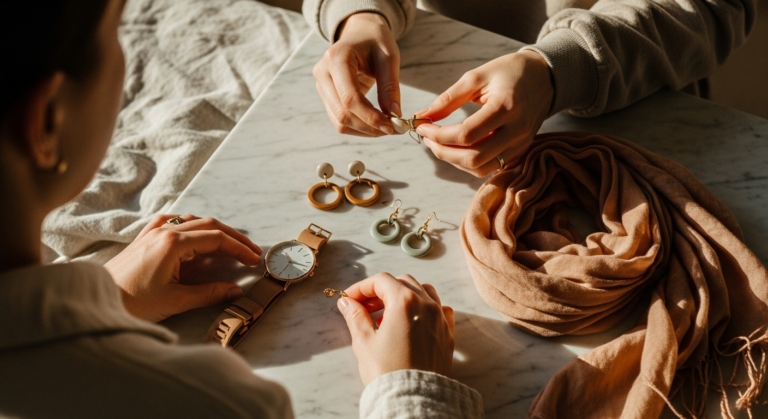
Accessories are the secret weapon. A pair of small gold or silver hoops ($5-$10 at Target), a simple pendant necklace, and a structured tote bag can make the simplest outfit look deliberately styled. These three items create a “third piece” that takes any basic combination from “I grabbed whatever was clean” to “she clearly thought about that.”
Care matters more than cost. Wash darks inside out in cold water. Hang dry anything with stretch (leggings, jeans). Remove pills with a $7 fabric shaver. Iron or steam your button-downs. A well-maintained $15 shirt outlasts and outperforms a neglected $50 one every time.
The Emotional Side of Dressing on a Budget
Let’s talk about the part that no shopping guide addresses: the feelings. Needing to dress on a tight budget while your body is in a postpartum state can trigger a cocktail of frustration, shame, and grief that goes beyond fabric and price tags.
You might mourn the body that fit into your old clothes. You might feel guilty spending anything on yourself when there are diapers to buy and daycare to pay for. You might scroll past influencers in $300 outfits and wonder why “effortless” looks so expensive when your version of effortless is a stained hoodie and yesterday’s ponytail.
Here’s what’s true: you deserve to get dressed in clothes that fit your body as it is right now. Not as punishment, not as a consolation prize, but as a basic act of self-respect. Spending $15 on a pair of leggings that make you feel like yourself isn’t frivolous — it’s necessary. You cannot pour into your family from a place of invisibility and self-neglect.
Your body grew a human. It did something extraordinary. The least it deserves is clothes that fit it properly and a person inside them who isn’t apologizing for taking up space.
Start with one piece this week. Just one thing that fits, that you feel good in, that’s yours. Build from there. Your wardrobe doesn’t have to be perfect. It just has to be better than yesterday — and within reach of your real budget, your real body, and your real life.
Mama in Chief
Mama in Chief is a wellness advocate and mother who learned the hard way that you can’t pour from an empty cup. After her own burnout journey, she now helps other moms prioritize their mental health, physical wellbeing, and personal identity alongside the beautiful chaos of motherhood.