Meditation for Busy Moms: A Practical Beginner’s Guide
You can reduce stress and improve patience by integrating meditation into your busy mom life. This guide debunks common myths and offers practical tips to start with just a few minutes daily, even amidst interruptions.
- Start your meditation practice with just 2-3 minutes daily; consistency is key.
- Don't worry about clearing your mind; simply notice when your mind wanders.
- Find your meditation moment whenever it works for you, even in the car or bathroom.
- Practice simple techniques like breath awareness to manage stress.
You’ve heard meditation helps with stress. You’ve probably tried once or twice, gotten interrupted by a child, and given up. Here’s the thing: meditation for moms looks nothing like the serene stock photos suggest. It’s messier, shorter, and often interrupted—but it still works.
Why Meditation Matters for Moms
Motherhood generates unique stress: constant vigilance, decision fatigue, touched-out overwhelm, and the mental load that never stops. Meditation offers specific benefits for these challenges:
Reduced reactivity: The pause between stimulus and response grows. You snap less.
Better emotional regulation: Big feelings (yours and theirs) become more manageable.
Improved focus: Scattered mom brain gets training in attention.
Lower stress hormones: Cortisol decreases with regular practice.
Better sleep: Even when disrupted, sleep quality improves.
Increased patience: The well you draw from gets deeper.
Research shows benefits begin with just a few minutes daily. You don’t need an hour. You need consistency.
Debunking Meditation Myths
“I can’t clear my mind”
No one can. Meditation isn’t about an empty mind—it’s about noticing when your mind wanders and gently returning attention. The wandering IS the practice.
“I don’t have time”
You have time to scroll your phone. You have time to meditate. Start with three minutes. That’s all.
“I can’t sit still that long”
Then don’t sit still. Walking meditation, movement meditation, and active mindfulness all count.
“I’ll do it when the kids are older”
Your stress is now. The benefits are needed now. Kids observe you managing stress—modeling meditation teaches them too.
“I tried and it didn’t work”
Meditation is a skill that develops over time. One attempt doesn’t equal failure any more than one gym visit equals fitness.
Getting Started: The Absolute Basics
Find Your Moment
Options for moms:
- Before kids wake (even 5 minutes earlier)
- During nap time (before chores)
- While kids have screen time (they’re occupied)
- At night after bedtime (before scrolling)
- In the car during school pickup (before kids come out)
- During pumping or nursing (natural sitting time)
The best time is whenever you’ll actually do it. Consistency trumps ideal timing.
Find Your Spot
- A chair in a quiet corner
- Your bed (if you won’t fall asleep)
- The bathroom (only room with a lock)
- Your car (parked, of course)
- Outside if weather permits
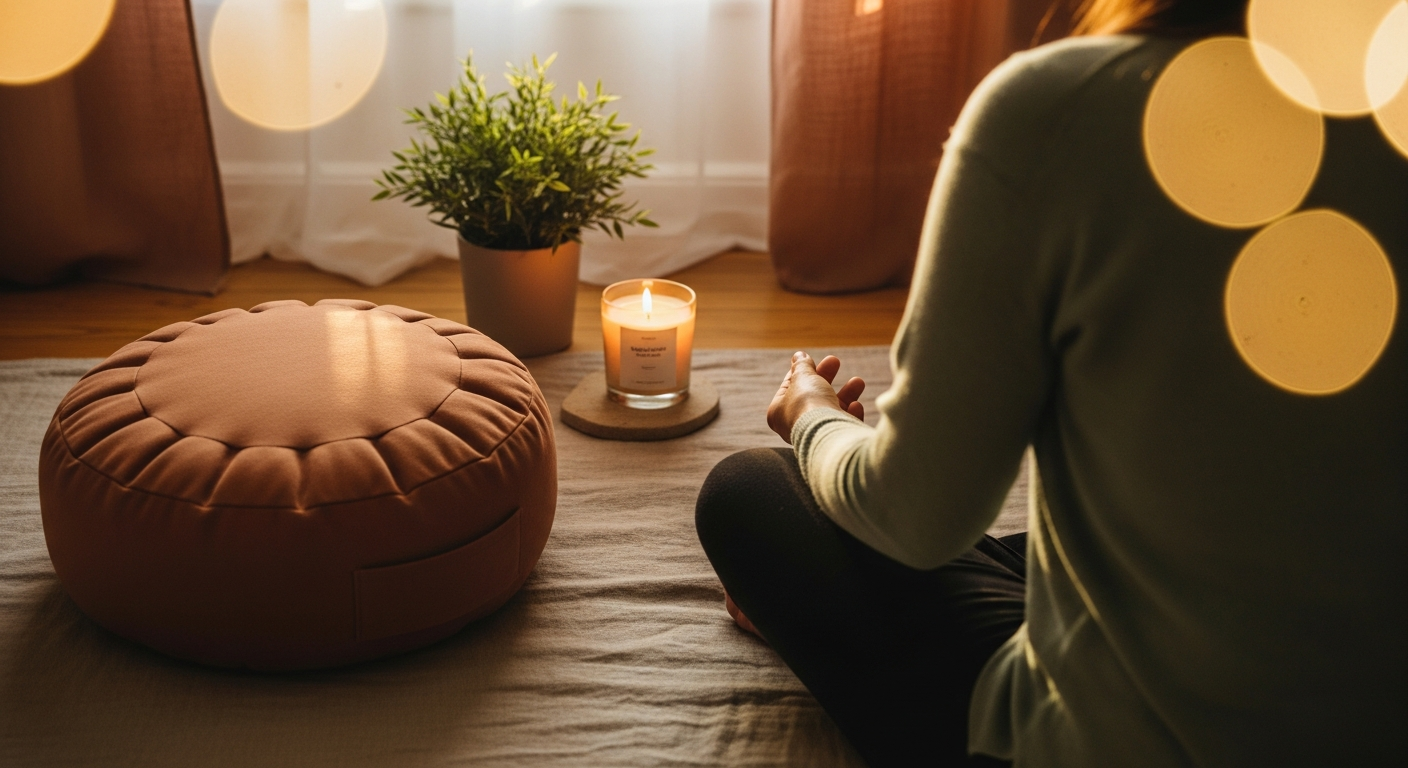
No special cushion required. Sit where you’re comfortable.
Find Your Duration
Start ridiculously small: 2-3 minutes. You can do anything for 3 minutes.
Build gradually: Add a minute when current duration feels easy.
Aim eventually for: 10-20 minutes, but don’t rush getting there.
For more small-window self-care, see our 5-minute self-care guide.
Basic Meditation Technique
Breath Awareness Meditation
The simplest, most accessible practice.
Steps:
- Sit comfortably. Close eyes or soften gaze.
- Notice your breathing. Don’t change it, just observe.
- When mind wanders (it will), notice without judgment.
- Gently return attention to breath.
- Repeat step 3 and 4. That’s the whole practice.
That’s it. The wandering and returning IS meditation. Each return is like a bicep curl for your attention.
Body Scan Meditation
Good for physical tension and reconnecting with your body.
Steps:
- Sit or lie comfortably.
- Notice sensations in your feet. Just notice.
- Slowly move attention up: ankles, calves, knees, thighs.
- Continue through hips, belly, chest, hands, arms, shoulders, neck, face.
- Notice the whole body together.
- When mind wanders, return to where you left off.
Loving-Kindness Meditation
Especially helpful when feeling depleted or resentful.
Steps:
- Sit comfortably, close eyes.
- Think: “May I be happy. May I be healthy. May I be at peace.”
- Visualize someone you love. Repeat phrases for them.
- Extend to neutral person, difficult person, all beings.
- Return to yourself.
Even modified versions help: “May I have patience today. May my kids be safe.”
Meditation Apps for Moms
Headspace: Friendly, beginner-focused, short sessions available.
Calm: Beautiful interface, sleep stories, daily calm.
Insight Timer: Free, huge library, timer function.
Ten Percent Happier: Skeptic-friendly, practical approach.
Simple Habit: Five-minute meditations for specific situations.
Expectful: Specifically designed for pregnancy and motherhood.
Apps provide guidance and accountability. Use them until you’re comfortable practicing alone.
Meditation When You’re Interrupted
Kids interrupt. It’s inevitable. Here’s how to handle it:
Prevention
- Set expectations: “Mommy needs 5 quiet minutes. Timer is set.”
- Provide an activity for them
- Meditate during occupied times (screen time, independent play)
- Wake earlier or stay up later (if possible)
When Interruption Happens
Option 1: Address and return. Handle the need briefly, then resume practice.
Option 2: Include them. “Let’s take three deep breaths together.”
Option 3: End gracefully. “I was meditating. I’m done now.” No guilt needed.
Option 4: Make it the practice. Interrupted meditation is training in real-life mindfulness.
Mindfulness Throughout the Day
Formal meditation isn’t the only option. Mindfulness can happen during regular activities:
Mindful Mornings
While drinking coffee: Notice the warmth, smell, taste. Just experience it fully for one minute before the day takes over.
Mindful Transitions
Before entering the house after work, pause. Take three breaths. Arrive intentionally rather than carrying work energy inside.
Mindful Meals
One meal or snack: eat without distraction. Notice flavors, textures, satisfaction. Even five minutes counts.
Mindful Moments with Kids
During play: fully attend to what’s happening without planning the next thing. Notice your child’s expressions, their words, this moment.
Mindful Waiting
In line, at red lights, during loading screens: instead of reaching for phone, take three breaths. These moments add up.
For more on mindful technology use, see our digital detox guide.
Common Struggles and Solutions
“I fall asleep”
You’re probably exhausted. Try:
- Meditating earlier in the day
- Sitting rather than lying down
- Keeping eyes slightly open
- Shorter sessions
If you still fall asleep, you needed sleep more than meditation. That’s okay.
“My thoughts won’t stop”
They’re not supposed to stop. The practice is noticing and returning, not achieving blankness. Busy thoughts = more opportunities to practice returning.
“I feel more anxious”
Sometimes awareness reveals anxiety that was already there. This usually passes as you build skill. If it persists, try guided meditations or walking meditation instead of silence.
“I don’t notice any benefits”
Benefits are often subtle and cumulative. You may notice you snapped less this week, slept slightly better, or recovered from frustration faster. Keep a brief journal to track changes.
“I keep forgetting to do it”
- Stack habit: meditate after existing habit (coffee, brushing teeth)
- Set phone reminder
- Put meditation cushion somewhere visible
- Use app that sends notifications
- Start with once weekly, build from there
Building a Sustainable Practice
Start So Small You Can’t Fail
Three minutes daily beats twenty minutes occasionally. Consistency matters more than duration.
Same Time, Same Place
Habit formation requires cues. Meditate at the same time and place when possible.
Track Your Practice
Simple check marks on a calendar provide accountability and visible progress.
Be Compassionate About Gaps
Missed days happen. Months might pass. The practice is always available when you return. No judgment required.
Adjust as Seasons Change
What works with a baby differs from what works with toddlers or school-age kids. Adapt your practice to your life phase.
Teaching Meditation to Kids
Once you have a practice, sharing with children benefits everyone.
Start simple:
- “Let’s take three deep breaths together”
- “Put your hand on your belly and feel it move”
- “What sounds can you hear right now?”
Resources:
- Cosmic Kids Yoga (YouTube)
- Calm Kids (app section)
- “Sitting Still Like a Frog” (book)
- Headspace kids section
Kids who learn mindfulness early develop emotional regulation skills that serve them for life.
The Realistic Goal
You’re not aiming for enlightenment. You’re aiming for:
- A little more patience
- A little more presence
- A little more peace
These small shifts transform the daily experience of motherhood. Three minutes at a time, you’re building a calmer relationship with yourself and your children.
Start today. Set a timer for three minutes. Close your eyes. Breathe. That’s all there is to it.