Gut Health for Moms: Simple Steps to Better Digestion, Energy, and Mood
Feeling exhausted, bloated, or anxious? Your gut health might be the culprit, influencing your mood, energy, and brain function. Learn how small changes can significantly improve your well-being.
- Your gut microbiome profoundly affects your mood, energy, and brain function.
- Motherhood's demands can disrupt your gut health, causing common symptoms.
- Your gut produces 90-95% of your body's mood-regulating serotonin.
- Small, realistic changes can significantly improve your gut health.
You open your eyes. The baby monitor says 5:52 AM. Before your feet hit the floor, the mental inventory begins: diaper change, bottle, older kid’s lunch, laundry switch, that email you forgot to send yesterday. You shuffle to the kitchen, pour coffee on an empty stomach, and by 8 AM you’ve fed everyone in the house except yourself. By noon, you’re bloated, exhausted, running on caffeine and goldfish crackers, and wondering why you feel like you’re moving through wet sand.
You chalk it up to being tired. To being a mom. To the vague, catch-all explanation of “just how it is now.”
But what if the fatigue, the brain fog, the bloating, the afternoon crash, the anxiety that hums beneath everything — what if it’s not just sleep deprivation or stress? What if a huge piece of what you’re feeling is coming from your gut?
Here’s the thing nobody told you during those prenatal appointments: your gut is running an enormous amount of the show. It influences your mood, your energy, your hormones, your immune system, your skin, and your ability to think clearly. And pregnancy, birth, postpartum recovery, breastfeeding, stress, and the chaotic eating patterns of early motherhood can absolutely wreck it. The good news? Your gut microbiome is remarkably responsive to change. Small, realistic shifts — not extreme diets or expensive supplement stacks — can make a meaningful difference in how you feel. And you deserve to feel better than “surviving.”
Let’s talk about what’s actually happening inside you, and what you can do about it without adding one more impossible task to your day.
Your Gut Is Running More of the Show Than You Think
The Microbiome: Your Internal Ecosystem
Inside your digestive tract lives a community of roughly 38 trillion microorganisms — bacteria, fungi, viruses, and other microbes that collectively weigh about three to five pounds. This community is called your gut microbiome, and it’s as unique to you as your fingerprint. No two people have the same microbial composition, and yours has been shaped by everything from how you were born (vaginal vs. cesarean) to what you ate for breakfast.
These aren’t passive hitchhikers. Your gut bacteria actively produce neurotransmitters, synthesize vitamins, regulate your immune system, metabolize hormones, and communicate directly with your brain. They’re not just living in you — they’re working for you. Or, when the balance is off, working against you.
A healthy microbiome is diverse. Think of it like a thriving garden with many species of plants, each playing a role. When certain species get wiped out (by antibiotics, stress, poor diet, or the massive hormonal shifts of pregnancy) and others overgrow, the whole ecosystem suffers. Researchers call this imbalance dysbiosis, and it’s linked to an astonishing range of symptoms — many of which moms dismiss as “normal” exhaustion.
The Gut-Brain Axis: Why Your Belly Affects Your Brain
There’s a reason we say “gut feeling” and “butterflies in my stomach.” The gut and brain are in constant, bidirectional communication through what scientists call the gut-brain axis — a complex network involving the vagus nerve, the immune system, and microbial metabolites.
Here’s a number that stops most people in their tracks: approximately 90-95% of your body’s serotonin — the neurotransmitter most associated with mood stability, happiness, and calm — is produced in your gut, not your brain. Your gut bacteria play a direct role in this production.
Research published in Nature Reviews Microbiology in 2024 confirmed that specific gut bacteria produce or stimulate the production of key neurotransmitters including serotonin, GABA (your calm-down chemical), and dopamine (your motivation and reward chemical). When your gut microbiome is disrupted, the production of these neurotransmitters can be disrupted too.
This means that the low-grade anxiety you can’t shake, the irritability that flares every afternoon, the brain fog that makes you forget why you walked into a room — these aren’t necessarily “just stress.” They may have a microbial component. Your gut is literally talking to your brain, and when the gut isn’t healthy, the messages it sends are not good ones.
If you’ve been working on your anxiety through all the right channels — therapy, deep breathing, limiting social media — and still feel like something is off, your gut health may be a missing piece of the puzzle.
The Gut-Immune Connection
Here’s another number: approximately 70% of your immune system resides in your gut. The gut-associated lymphoid tissue (GALT) is the largest immune organ in your body. Your gut microbiome trains and modulates this immune tissue, helping it distinguish between harmless substances and actual threats.
When your gut barrier is compromised (more on “leaky gut” later), partially digested food particles and bacterial toxins can enter your bloodstream, triggering chronic low-grade inflammation. This inflammation doesn’t always show up as dramatic symptoms. Often it manifests as fatigue, joint aches, skin issues, brain fog, and that general feeling of being unwell that you can’t quite pin down.
For moms who feel like they’re catching every cold their kids bring home, or who just feel generally run-down despite “doing everything right,” gut health is worth investigating.
How Pregnancy, Birth, and Postpartum Change Your Gut
Pregnancy Rewires Your Microbiome
Your gut microbiome doesn’t just change a little during pregnancy — it undergoes a dramatic transformation. Research published in Cell found that the composition of a pregnant woman’s gut microbiome shifts significantly, particularly in the third trimester. Specifically, diversity decreases and certain pro-inflammatory bacteria increase.
Here’s the surprising part: these changes resemble what you’d see in metabolic disease in a non-pregnant person. But in pregnancy, they appear to be adaptive — they help your body store more fat and increase blood sugar to support fetal growth. Your body is intentionally reshaping your microbiome to support pregnancy.
The problem is that after birth, this reshaping doesn’t automatically reverse. For many women, the microbiome remains altered for months or even years postpartum, particularly if recovery is complicated by:
- Antibiotics during labor (given to approximately 30-40% of birthing mothers for GBS prophylaxis or cesarean delivery)
- Cesarean birth (which bypasses the vaginal microbiome transfer to baby and involves prophylactic antibiotics)
- Postpartum antibiotics for infections, mastitis, or complications
- Stress and sleep deprivation (both of which independently alter gut bacteria)
- Dietary changes (the survival eating patterns of early motherhood)
Breastfeeding and the Gut
Breastfeeding creates its own gut microbiome dynamic. Human milk contains over 200 different oligosaccharides (complex sugars) that your body cannot digest — they exist solely to feed your baby’s developing gut bacteria. But the production of these oligosaccharides also draws on your own nutritional reserves, and the hormonal shifts of lactation (particularly elevated prolactin and suppressed estrogen) further influence your gut microbial composition.
Many breastfeeding mothers report digestive changes — increased hunger, different food tolerances, bloating, or constipation — that they attribute to hormones alone. Hormones are part of it, but the microbiome shifts of lactation are too.
The Postpartum Gut Recovery Timeline
For most women, the gut microbiome begins to recover toward its pre-pregnancy composition within the first year postpartum. But “begins to recover” and “fully recovers” are different things. A 2023 study in Nature Communications found that some microbial changes persist for at least a year after birth, and women who experienced complications, took antibiotics, or had high stress levels showed slower recovery.
This is relevant because many moms are still dealing with digestive issues, energy problems, and mood symptoms months or years after birth and assume it’s “just how things are now.” It doesn’t have to be. Your gut is capable of rebuilding. It just needs the right inputs.
Signs of Poor Gut Health That Moms Often Dismiss
This is where things get personal. Because most moms I know — myself included — have normalized at least half of these symptoms as “just being tired” or “just being a mom.” They’re common, but they’re not inevitable.
Digestive Symptoms
Bloating after meals. Not the “I ate Thanksgiving dinner” bloating. The “I had a normal lunch and now I look six months pregnant” bloating. This is often a sign of bacterial imbalance or food fermentation happening in the wrong part of your digestive tract.
Constipation or irregular bowel movements. You should be having a comfortable bowel movement at least once a day. If you’re going every two or three days, or it’s consistently difficult or painful, your gut motility is off — and gut bacteria play a key role in motility.
Gas that seems disproportionate to what you ate. Excessive gas is a sign of fermentation — bacteria breaking down food and producing gas as a byproduct. Some gas is normal. Constant, uncomfortable gas is your microbiome telling you something.
Acid reflux or heartburn. Common during pregnancy, but if it’s persisting well after, it may be related to gut bacterial imbalance or a weakened lower esophageal sphincter from pregnancy changes.
Beyond-the-Gut Symptoms
Persistent fatigue that sleep doesn’t fix. You’re tired, yes. But there’s tired from a bad night, and then there’s the bone-deep exhaustion that persists even when you do get decent sleep. Gut dysbiosis and the chronic inflammation it causes are significant contributors to fatigue that won’t resolve with rest alone. If you’ve been searching for energy in all the usual places and still feel drained, your gut may be the overlooked factor.
Brain fog and difficulty concentrating. Forgetting words, losing your train of thought, feeling mentally slow — this isn’t just “mom brain.” Inflammatory signals from an unhealthy gut cross the blood-brain barrier and directly impair cognitive function. Research from the Alzheimer’s & Dementia journal in 2025 found that gut microbiome composition is significantly associated with cognitive performance.
Mood disturbances. Anxiety, low mood, irritability — especially if they’re not fully explained by your circumstances. Remember: 90-95% of serotonin is gut-produced. If your gut isn’t making it efficiently, you’ll feel the difference.
Skin issues. Eczema, acne, rosacea, or mysterious rashes that appeared during or after pregnancy and won’t go away. The gut-skin axis is well-documented — gut inflammation often shows up on your skin first.
Frequent illness. With 70% of your immune system in your gut, a compromised microbiome means compromised immunity. If you’re constantly catching whatever’s going around daycare, your gut’s immune training may be off.
Sugar cravings that feel uncontrollable. Certain gut bacteria literally thrive on sugar and can influence your cravings to get more of what they want. Those 3 PM cookie cravings may not be a willpower failure — they may be microbial manipulation.
Weight that won’t budge. Despite eating reasonably and moving your body, the weight from pregnancy seems stuck. Gut bacteria influence how you extract calories from food, how you store fat, and how you regulate hunger hormones. An imbalanced microbiome can make weight management significantly harder.
If you’re reading this list thinking, “Wait, I have like seven of these” — you’re not alone. And you’re not broken. You just need to tend to an ecosystem that’s been through a lot.
The Gut-Hormone Connection: Why This Matters for Hormonal Recovery
Your Gut Metabolizes Your Hormones
Your gut microbiome doesn’t just influence your mood and immunity — it plays a direct role in hormone metabolism. There’s a specific collection of gut bacteria called the estrobolome that is responsible for metabolizing estrogen. These bacteria produce an enzyme called beta-glucuronidase that determines how much estrogen is recirculated in your body versus how much is excreted.
When the estrobolome is disrupted (by antibiotics, stress, poor diet, or the shifts of pregnancy), estrogen metabolism gets thrown off. This can contribute to:
- Estrogen dominance — heavy periods, PMS, breast tenderness, mood swings
- Hormone-related weight gain — particularly around the midsection
- Difficulty with hormonal recovery postpartum — your period returning irregular, unpredictable, or with severe symptoms
Cortisol and the Gut
The relationship between stress hormones and gut health is a vicious cycle. Chronic stress (hello, motherhood) increases cortisol production. Elevated cortisol damages the gut lining, reduces microbial diversity, and shifts the balance toward inflammatory bacteria. The resulting gut dysfunction then sends inflammatory signals to the brain, which increases the stress response, which produces more cortisol, which further damages the gut.
This is why nervous system regulation and gut health are so deeply intertwined. You can eat all the fermented foods in the world, but if your stress levels are chronically elevated, your gut will struggle to heal. The two must be addressed together.
Thyroid and Gut Health
Thyroid issues are remarkably common in postpartum women — postpartum thyroiditis affects an estimated 5-10% of mothers. What many women (and some doctors) don’t realize is that the gut microbiome influences thyroid function. Gut bacteria help convert inactive thyroid hormone (T4) to active thyroid hormone (T3), and gut inflammation can trigger autoimmune thyroid responses.
If you’ve been diagnosed with postpartum thyroid issues, or if you have symptoms (fatigue, weight changes, hair loss, feeling cold, depression) that haven’t been fully explained, gut health is worth investigating alongside your thyroid panel.
Practical Dietary Changes: Building a Gut-Friendly Diet Without Losing Your Mind
Here’s where most gut health content loses me. It prescribes elaborate meal plans, exotic superfoods, and elimination protocols that require the time and energy of someone who doesn’t have tiny humans demanding chicken nuggets at 5 PM. Let’s be realistic instead.
Fiber: The Single Most Important Thing
If you change one thing about your diet for gut health, make it this: eat more fiber. Full stop.
Fiber is the primary food source for your beneficial gut bacteria. When they ferment fiber, they produce short-chain fatty acids (SCFAs) — particularly butyrate, propionate, and acetate — that nourish the cells lining your gut, reduce inflammation, support immune function, and even influence brain chemistry. Without adequate fiber, your beneficial bacteria starve, and the balance shifts toward less desirable species.
Most Americans get about 15 grams of fiber per day. The recommendation is 25-30 grams. Most moms I know are closer to 10, because their diet consists largely of kid-food leftovers and whatever’s fastest.
Easy fiber wins (no special grocery trips required):
- Oatmeal for breakfast — 4g fiber per serving, takes 2 minutes in the microwave
- An apple or pear with skin — 4-5g fiber each
- A handful of almonds — 3.5g fiber
- Black beans in anything — half a cup has 7.5g fiber (add to tacos, eggs, soup, rice bowls)
- Whole grain bread instead of white — 3-4g fiber per slice vs. less than 1g
- Broccoli or Brussels sprouts — 5g fiber per cup (roast with olive oil and salt, done)
- Raspberries — 8g fiber per cup (the fiber champion of fruits)
- Chia seeds — 10g fiber per ounce (stir into yogurt, oatmeal, or smoothies)
- Lentils — 15g fiber per cup cooked (add to soup, stew, or pasta sauce)
The critical rule: increase fiber gradually. If you go from 10 grams to 30 grams overnight, you will be miserable. Your gut bacteria need time to adjust. Add one new fiber source every few days and drink plenty of water alongside it.
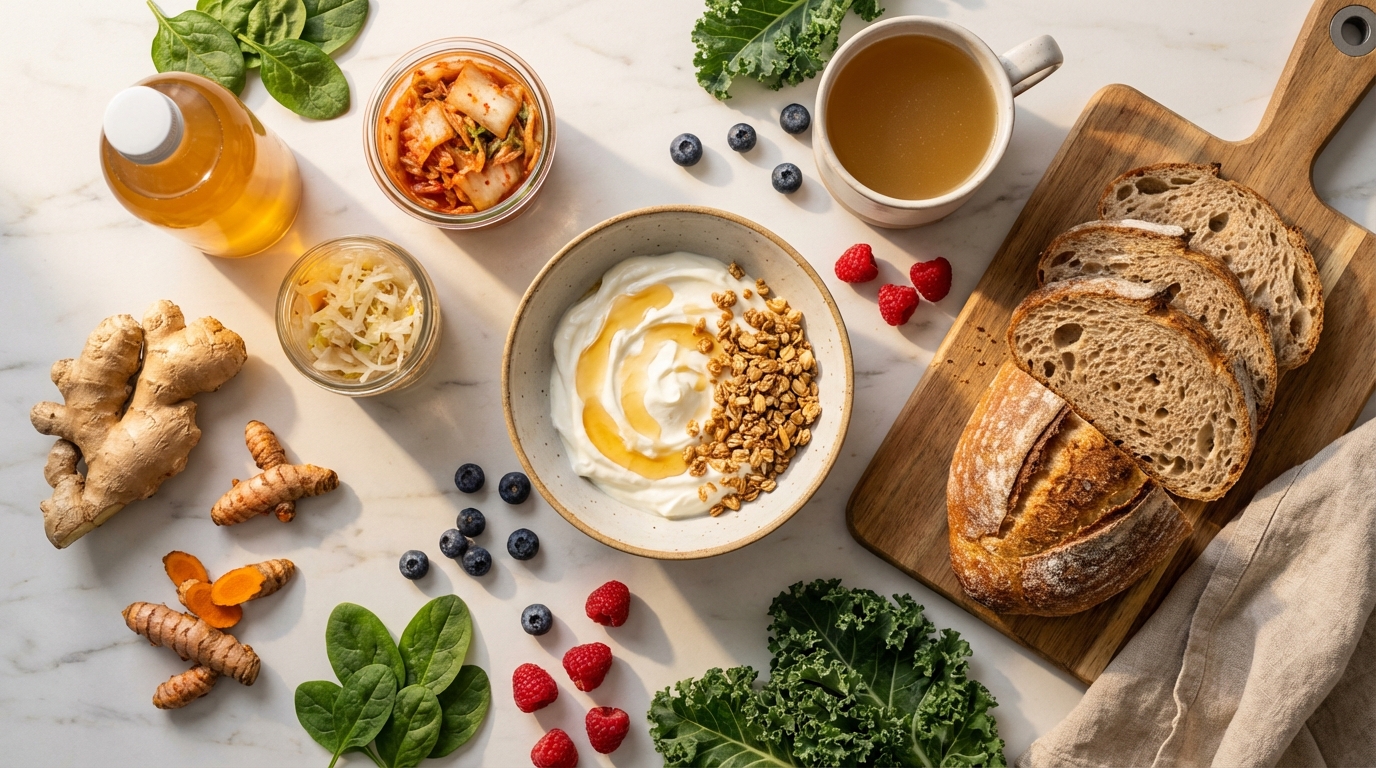
Fermented Foods: Feeding and Seeding Your Gut
Fermented foods contain live beneficial bacteria (probiotics) that can help repopulate and diversify your microbiome. A landmark 2021 Stanford study published in Cell found that a diet high in fermented foods increased microbiome diversity and decreased markers of inflammation — more effectively than a high-fiber diet alone over a 10-week period.
Fermented foods to incorporate:
- Yogurt (with live active cultures — check the label) — the easiest entry point
- Kefir — drinkable fermented milk with even more bacterial strains than yogurt
- Sauerkraut (refrigerated, not shelf-stable) — the shelf-stable kind is pasteurized, killing the beneficial bacteria
- Kimchi — fermented cabbage with a kick; add to rice bowls, eggs, or eat as a side
- Miso — fermented soybean paste; stir into soups or use as a salad dressing base
- Kombucha — fermented tea; a good swap for soda or afternoon caffeine (look for brands with less than 5g sugar)
- Tempeh — fermented soybeans; a protein-rich meat alternative
- Pickles (naturally fermented, in the refrigerator section) — most grocery store pickles are vinegar-pickled, not fermented
The goal: 2-3 servings of fermented foods daily. This doesn’t need to be complicated. Yogurt at breakfast, a forkful of sauerkraut with lunch, miso soup with dinner. That’s it.
Prebiotics: Fertilizer for Your Good Bacteria
Prebiotics are specific types of fiber and compounds that preferentially feed beneficial bacteria. Think of them as fertilizer for the good guys in your gut garden. Many foods are naturally prebiotic:
- Garlic and onions (cooked or raw)
- Leeks
- Asparagus
- Bananas (especially slightly green ones)
- Oats
- Apples
- Flaxseeds
- Jerusalem artichokes (also called sunchokes)
- Dandelion greens
You’re probably already eating some of these without realizing their prebiotic value. Garlic and onions are in most home cooking. Bananas are a kid staple. Oats are a breakfast default. Give yourself credit for what you’re already doing, and look for places to add a little more.
Polyphenols: The Unsung Gut Heroes
Polyphenols are compounds found in colorful plant foods that gut bacteria metabolize into beneficial anti-inflammatory compounds. They’re less discussed in mainstream gut health content, but the research on their microbiome benefits is compelling.
Polyphenol-rich foods:
- Berries (blueberries, strawberries, blackberries)
- Dark chocolate (70%+ cacao — yes, chocolate is on the list)
- Green tea
- Coffee (your daily cup is actually feeding beneficial bacteria)
- Red grapes
- Extra virgin olive oil
- Nuts (especially walnuts and pecans)
- Herbs and spices (turmeric, cinnamon, oregano, cloves)
If you’ve been feeling guilty about your coffee habit, here’s a small consolation: moderate coffee consumption has been associated with increased microbiome diversity. Your morning cup may be doing more good than you think (just try to eat something alongside it).
Foods That Undermine Gut Health (And Realistic Alternatives)
I’m not going to give you a list of “never eat these” foods, because that kind of rigid thinking doesn’t survive contact with real motherhood. What I will do is explain which foods, when consumed in excess, tend to harm your gut microbiome — and offer swaps that don’t require a lifestyle overhaul.
Ultra-Processed Foods
This is the big one. Ultra-processed foods — those with long ingredient lists full of additives, emulsifiers, artificial sweeteners, and preservatives — are consistently associated with reduced microbiome diversity and increased gut inflammation. Emulsifiers (found in ice cream, salad dressings, and many packaged foods) have been shown to damage the protective mucus layer of the gut lining.
The reality check: If you have kids, ultra-processed foods are in your house. Chicken nuggets, packaged snacks, boxed mac and cheese — these aren’t going away tomorrow, and making yourself feel guilty about them helps no one.
The realistic approach:
- Reduce, don’t eliminate. Swap one ultra-processed item per week for a whole-food version.
- Read ingredient lists. Fewer ingredients generally means less processing.
- When buying packaged foods, choose options without artificial sweeteners (sucralose, aspartame, saccharin), which have been shown to negatively alter gut bacteria.
- Cook one more meal from scratch per week than you currently do. That’s it. One more.
Added Sugar
Excess sugar feeds opportunistic bacteria and yeasts (like Candida) at the expense of beneficial species. High sugar intake is associated with reduced microbiome diversity and increased intestinal permeability (“leaky gut”).
The realistic approach:
- You don’t need to quit sugar. You need to reduce the excess.
- Watch liquid sugar especially — sodas, sweetened coffee drinks, and juice are the fastest delivery system.
- Switch to dark chocolate (70%+) when you want something sweet — you get polyphenols with your sugar.
- Use fruit to satisfy sweet cravings — the fiber in fruit slows sugar absorption and feeds good bacteria simultaneously.
Artificial Sweeteners
Research published in Cell in 2022 demonstrated that common artificial sweeteners (saccharin, sucralose, aspartame, and stevia) alter the human gut microbiome in ways that can impair glucose metabolism. The “zero calorie” label masks a real cost to your gut.
The realistic approach:
- Switch from diet soda to sparkling water with a splash of fruit juice.
- If you sweeten your coffee, try reducing the amount gradually rather than switching to artificial alternatives.
- Small amounts of real sugar are generally better for your gut than large amounts of artificial sweetener.
Excessive Alcohol
Alcohol increases intestinal permeability, promotes overgrowth of harmful bacteria, and reduces beneficial species. Even moderate alcohol consumption has measurable effects on the microbiome.
The realistic approach:
- If you drink, keep it moderate and occasional.
- Red wine in small amounts offers some polyphenol benefits, but the alcohol still affects your gut.
- Kombucha or sparkling water with bitters can fill the “adult drink” need without the gut impact.
Beyond Food: The Non-Dietary Gut Health Factors
Here’s what the Instagram gut health influencers don’t emphasize enough: you cannot eat your way to a healthy gut if your stress is through the roof, you’re not sleeping, and you never move your body. The microbiome responds to your entire lifestyle, not just your plate.
Stress: The Silent Gut Destroyer
Chronic stress is one of the most potent disruptors of gut health — and one of the most unavoidable realities of motherhood. Stress directly alters the composition of your gut microbiome, increases intestinal permeability, reduces production of protective mucus, and shifts your gut bacteria toward inflammatory species.
Research from the American Psychological Association has repeatedly shown that the stress-gut connection is bidirectional: stress damages your gut, and a damaged gut amplifies your stress response. This is the cycle that keeps many moms trapped in a fog of exhaustion and anxiety.
What actually helps:
- Nervous system regulation practices — even brief ones. The techniques in this guide directly benefit your gut by reducing the cortisol that damages it.
- Any stress-reduction practice you’ll actually do. Walking, journaling, calling a friend, taking a bath, five minutes of quiet on the porch. Imperfect stress management beats perfect stress management you never do.
- Boundaries. Saying no to commitments that deplete you is gut health. Setting limits on your availability is gut health. Protecting your energy is gut health. It doesn’t feel as concrete as eating yogurt, but it matters just as much.
Sleep: When Your Gut Repairs Itself
Your gut microbiome follows a circadian rhythm — certain bacteria are more active during the day, others at night. Disrupted sleep disrupts this rhythm, reduces microbial diversity, and increases gut permeability. A 2023 study in European Journal of Nutrition found that even partial sleep deprivation for two nights was enough to measurably alter gut microbiome composition.
For moms with babies and young children, “get better sleep” can feel like cruel advice. You can’t force a baby to sleep through the night. But you can optimize the sleep you do get.
What’s within your control:
- Reduce screen time before bed (blue light suppresses melatonin, which also affects gut motility)
- Create a sleep-friendly environment — even small changes to your bedroom can improve sleep quality
- Go to bed when you’re tired instead of “revenge bedtime procrastinating” on your phone
- Nap when you can, without guilt. Short naps (20-30 minutes) support circadian rhythm without disrupting nighttime sleep
- Accept that this season of disrupted sleep is temporary, and do what you can within it
Movement: The Microbiome Loves When You Move
Exercise independently improves gut microbiome diversity — even without dietary changes. A 2024 meta-analysis in Gut Microbes found that regular moderate exercise increased levels of beneficial bacteria (particularly butyrate-producing species) and reduced markers of intestinal inflammation.
You don’t need intense workouts. In fact, extremely intense exercise can temporarily increase gut permeability (so those “go hard” bootcamp classes might not be doing your gut any favors right now).
What does help:
- Walking — the most underrated gut health intervention. A daily walk, even 15-20 minutes, improves gut motility and microbial diversity.
- Gentle morning stretches — twisting poses are particularly beneficial for digestion and gut motility.
- Yoga — the combination of movement, breathing, and stress reduction is a trifecta for gut health.
- Playing actively with your kids — chasing them around the yard counts. Dancing in the kitchen counts. Walking to the park counts.
What to avoid for now: High-intensity exercise on an empty stomach, which can increase cortisol and gut permeability. Eat something before you work out, even if it’s just a banana and a handful of nuts.
Hydration: The Often-Forgotten Factor
Water is essential for the mucus lining that protects your gut wall, for fiber to do its job properly (fiber without water is a constipation recipe), and for overall digestive function. Many moms are chronically dehydrated, especially if breastfeeding.
A simple target: Aim for half your body weight in ounces of water daily. If you weigh 150 pounds, that’s 75 ounces — about nine 8-ounce glasses. Add more if you’re breastfeeding or exercising.
Make it easy: Keep a water bottle visible and within arm’s reach at all times. Refill it when you refill your kid’s cup. Drink a glass of water before your morning coffee. Add lemon, cucumber, or berries if plain water bores you.
Should You Take a Probiotic? (An Honest Answer)
Walk into any health food store and you’ll find an entire wall of probiotic supplements, each promising to transform your gut health. Let’s cut through the marketing.
What the Research Actually Says
Probiotics are live microorganisms that, when consumed in adequate amounts, confer a health benefit. The research supporting specific probiotic strains for specific conditions is growing, but it’s not as straightforward as “take this pill, fix your gut.”
What probiotics CAN help with (evidence-supported):
- Antibiotic-associated diarrhea — taking probiotics during and after a course of antibiotics reduces the disruption to your microbiome
- IBS symptoms — certain strains (particularly Bifidobacterium infantis 35624 and Lactobacillus plantarum 299v) have shown benefit in clinical trials
- Postpartum mood support — a 2024 systematic review found that specific multi-strain probiotics showed promise in reducing symptoms of postpartum depression and anxiety, though more research is needed
- Immune support — certain strains can reduce the frequency and severity of upper respiratory infections
What probiotics probably CAN’T do:
- Replace the benefits of a fiber-rich, fermented-food-filled diet
- Permanently colonize your gut (most probiotic bacteria are transient — they help while you take them but don’t take up permanent residence)
- Fix gut health while you’re eating poorly and stressed to the ceiling
If You Do Take a Probiotic
- Choose evidence-based strains, not just the one with the nicest packaging. Look for products that specify the strain (e.g., Lactobacillus rhamnosus GG, not just “Lactobacillus”)
- CFU count matters less than strain selection. More billions isn’t always better.
- Refrigerated probiotics aren’t automatically superior. Some strains are shelf-stable; the key is third-party testing.
- Give it 4-6 weeks. Probiotics aren’t instant. If you don’t notice a difference after 6 weeks, that particular product may not be what your microbiome needs.
- Food first. If you’re not eating fiber and fermented foods, a probiotic supplement is trying to patch a leaking roof while ignoring the hole. Start with diet, add a probiotic if you want additional support.
Understanding “Leaky Gut” (Without the Hype)
You’ve probably seen “leaky gut” mentioned in wellness spaces, sometimes with a side of fearmongering. Let’s separate the science from the hype.
What’s Actually Happening
Your intestinal lining is a single layer of cells held together by structures called tight junctions. These junctions are selective — they allow nutrients through while keeping out pathogens, toxins, and undigested food particles. When these tight junctions become damaged or loosened, the intestinal barrier becomes more permeable than it should be. This is what’s technically called increased intestinal permeability — or, colloquially, “leaky gut.”
When the barrier is compromised, substances that should stay inside your digestive tract can enter your bloodstream. Your immune system, which isn’t accustomed to seeing these substances in the blood, mounts an inflammatory response. This can manifest as food sensitivities, skin reactions, joint pain, brain fog, fatigue, and exacerbation of autoimmune conditions.
What Causes Increased Permeability
- Chronic stress (elevated cortisol directly loosens tight junctions)
- Poor diet (high sugar, low fiber, emulsifiers, alcohol)
- Antibiotics (which disrupt the protective bacterial layer)
- NSAIDs (ibuprofen and naproxen can increase permeability — relevant for postpartum moms using them for pain)
- Sleep deprivation
- Intense exercise
Notice a pattern? Many of these are intensified during the postpartum period. This is why so many moms develop new food sensitivities, skin issues, or autoimmune symptoms after having a baby.
What Helps Repair the Gut Lining
- Removing or reducing the causes (when possible)
- L-glutamine — an amino acid that is the primary fuel for intestinal cells; found in bone broth, meat, eggs, dairy, and available as a supplement
- Zinc — essential for tight junction integrity; found in meat, shellfish, legumes, and seeds
- Omega-3 fatty acids — reduce intestinal inflammation; found in fatty fish, chia seeds, flaxseeds, and walnuts
- Butyrate — the short-chain fatty acid produced when gut bacteria ferment fiber (another reason fiber is king)
- Collagen or bone broth — provides amino acids (glycine, proline) that support gut lining repair
- Time — with the right inputs, the gut lining can regenerate relatively quickly, as intestinal cells turn over every 3-5 days
When to See a Doctor: Red Flags vs. Normal Adjustment
Not everything is a DIY gut health project. Some symptoms warrant professional evaluation.
See a Doctor If You’re Experiencing:
- Blood in your stool — always worth investigating, never normal
- Unintentional weight loss — losing weight without trying, especially postpartum when you should be nourishing
- Persistent, worsening abdominal pain — not occasional bloating, but pain that’s severe or getting worse
- Dramatic change in bowel habits lasting more than 2-3 weeks — sudden constipation or diarrhea that doesn’t resolve
- Symptoms of food allergies (hives, swelling, difficulty breathing) vs. intolerances (bloating, gas, discomfort) — allergies need medical attention
- Signs of postpartum thyroid issues — fatigue, weight changes, feeling cold, hair loss, depression
- Mental health symptoms that are severe or worsening — gut health support is complementary to professional mental health care, not a replacement
- Night sweats, fever, or chills alongside digestive symptoms — may indicate infection
When Gut Symptoms Are Probably “Normal” Postpartum Adjustment:
- Mild bloating that comes and goes
- Changes in bowel habits during the first few months postpartum
- Increased gas with dietary changes
- Mild food sensitivities that weren’t present before pregnancy
- Sugar cravings, especially while breastfeeding
“Normal” doesn’t mean you have to accept it forever. It means these symptoms are common in the adjustment period and often respond to the dietary and lifestyle changes in this article. Give your body time and support, and reassess if things aren’t improving after a few months of consistent effort.
Who to See
- Your OB-GYN or midwife — for postpartum digestive concerns, especially if they started during or after pregnancy
- A gastroenterologist — for persistent, unexplained digestive symptoms
- A registered dietitian — for personalized gut health nutrition guidance (look for one experienced in maternal health)
- A functional medicine practitioner — for a comprehensive approach that considers gut health, hormones, stress, and nutrition together (ensure they’re licensed and evidence-based)
A Simple 4-Week Gut Health Reset for Busy Moms
You don’t need to overhaul everything at once. Here’s a gentle, week-by-week approach that builds on itself. Think of it less as a “program” and more as a slow turn of the steering wheel.
Week 1: Add Fiber and Hydrate
- Add one new fiber-rich food to your daily routine (oatmeal, an apple, a handful of almonds)
- Increase water intake to at least 6-8 glasses per day
- Continue eating exactly as you normally do otherwise
Week 2: Introduce Fermented Foods
- Add one serving of fermented food daily (yogurt at breakfast, sauerkraut with lunch, or kefir as a snack)
- Continue the fiber addition from Week 1
- Notice (without judgment) how your digestion is responding
Week 3: Reduce One Gut Disruptor
- Identify one ultra-processed food you eat frequently and swap it for a whole-food alternative
- Or reduce added sugar in one area (switch from soda to sparkling water, cut the sugar in your coffee by half)
- Continue fiber and fermented food additions
Week 4: Address a Non-Food Factor
- Choose one stress-reduction practice and do it three times this week
- Optimize one aspect of your sleep environment
- Add a daily walk, even if it’s just 10 minutes
- Take stock of how you’re feeling compared to four weeks ago
What to expect: The first week may involve increased gas and bloating as your gut bacteria adjust to more fiber. This is normal and temporary — it means the bacteria are doing their job. By Week 3-4, most women notice improvements in bloating, energy, bowel regularity, and often mood.
Gut Health and Your Relationship With Food
One more thing before we wrap up, and it’s important. Gut health content can easily become another vehicle for diet culture — another list of rules, another way to feel like you’re failing, another reason to scrutinize every bite.
That’s not what this is.
If reading this article makes you feel anxious about what you’re eating, take a breath. Your gut microbiome is resilient. It responds to patterns, not individual meals. Having pizza for dinner doesn’t undo a week of fiber-rich eating. Eating a packaged snack doesn’t erase the yogurt you had for breakfast.
The relationship you have with food matters for your gut health too. Stress and anxiety around eating activate the sympathetic nervous system, which diverts resources away from digestion. Ironically, eating the “perfect” gut health diet while stressed about whether you’re doing it right may be worse for your gut than eating a moderately healthy diet with ease and enjoyment.
If you have a complicated relationship with food — and many moms do — please be gentle with this information. Take what serves you. Leave what triggers you. And if nutrition has felt like one more thing to be perfect at, remember: good enough is genuinely good enough.
Mama in Chief
Mama in Chief is a wellness advocate and mother who learned the hard way that you can’t pour from an empty cup. After her own burnout journey, she now helps other moms prioritize their mental health, physical wellbeing, and personal identity alongside the beautiful chaos of motherhood.
Frequently Asked Questions
Can I improve my gut health while breastfeeding?
Absolutely, and it’s actually an excellent time to do so because the beneficial bacteria you cultivate can be passed to your baby through breast milk. Focus on fiber-rich foods, fermented foods, and hydration. Avoid extreme elimination diets while breastfeeding unless directed by a healthcare provider, as restrictive eating can reduce milk supply and deplete your own nutritional reserves. Most fermented foods are safe during breastfeeding — in fact, cultures around the world have traditionally emphasized fermented foods for nursing mothers.
How long does it take to notice a difference after improving gut health habits?
Most women notice initial changes within 2-4 weeks — particularly improvements in bloating, bowel regularity, and energy. Mood and cognitive improvements may take longer, typically 4-8 weeks, because the gut-brain axis changes are more gradual. Significant microbiome remodeling can take 3-6 months of consistent habits. The key word is consistent, not perfect. Your gut responds to what you do most of the time, not occasionally.
Are probiotic supplements safe during pregnancy and postpartum?
Most probiotic supplements are considered safe during pregnancy and postpartum, but it’s always wise to check with your healthcare provider, especially if you have immune system concerns. The most well-studied strains in pregnancy include Lactobacillus rhamnosus GG and Bifidobacterium lactis. Some research suggests that maternal probiotic use during pregnancy may reduce the risk of eczema in infants, though the evidence is still evolving. Food-based probiotics (yogurt, kefir, sauerkraut) are generally considered safe for all stages.
My baby has colic/reflux/eczema — could my gut health be a factor?
Possibly. Maternal gut health influences the bacteria that colonize your baby’s gut (through birth, skin-to-skin contact, and breast milk). Some research suggests that maternal probiotic supplementation during pregnancy and breastfeeding may reduce infant colic and eczema risk. However, infant digestive and skin issues are multifactorial, so while improving your own gut health is beneficial for many reasons, it may not be the sole solution for your baby’s symptoms. Discuss your baby’s specific issues with their pediatrician.
I had a cesarean birth and/or took antibiotics. Is my gut permanently damaged?
No. Antibiotics and cesarean birth do alter the gut microbiome, sometimes significantly, but the microbiome is remarkably adaptable. With intentional support — fiber, fermented foods, stress management, and time — your gut can rebuild diversity. It may take longer than someone who didn’t have these disruptions, but “longer” is not “never.” A 2025 study found that focused dietary intervention could restore most microbial diversity markers within 6-12 months even after multiple rounds of antibiotics. Be patient with the process and consistent with the inputs.
Do I need to do a gut health test (stool test, microbiome analysis)?
Consumer microbiome tests have become widely available, but their clinical utility is still debated. They can provide interesting information about your microbial composition, but the science of interpreting these results and making specific recommendations based on them is still young. Most functional medicine practitioners who order these tests use them as one data point among many, not as a standalone diagnostic tool. For most moms, starting with the dietary and lifestyle changes in this article is more impactful (and far less expensive) than testing. If you’ve made consistent changes for 3-6 months without improvement, a comprehensive stool analysis through a healthcare provider may help identify specific imbalances.
What about bone broth — is it really a gut health superfood?
Bone broth contains amino acids (glycine, proline, glutamine) and gelatin that may support gut lining repair. It’s also hydrating, easy to digest, and soothing. However, it’s not magical, and you can get these same amino acids from other protein sources. If you enjoy bone broth, it’s a wonderful addition to a gut-supportive diet. If the thought of simmering bones for 24 hours makes you want to crawl under a blanket, you can buy pre-made bone broth, use collagen peptide powder in your coffee, or simply eat adequate protein from any source. Don’t let the wellness-industrial complex convince you that one specific food is the key to everything.
Your Gut Has Been Through a Lot. So Have You.
Growing a human, birthing a human, and keeping a human alive while navigating sleep deprivation, hormonal upheaval, and the relentless demands of modern motherhood — your body has done extraordinary things. Your gut microbiome has been along for the entire ride, shifting and adapting at every stage.
If you’ve been feeling off — tired in a way that sleep doesn’t fix, foggy in a way that coffee doesn’t clear, anxious in a way that deep breaths don’t fully reach — it might not be “just” stress or “just” motherhood. It might be your gut asking for attention.
You don’t need to overhaul your entire diet. You don’t need a cabinet full of supplements. You don’t need another reason to feel like you’re falling short.
You need more fiber. More fermented foods. More water. Less stress when possible. Movement when you can. Sleep when you can get it. And patience — with the process and with yourself.
Start with one thing. Maybe it’s oatmeal instead of skipping breakfast. Maybe it’s a spoonful of sauerkraut with lunch. Maybe it’s a walk around the block after dinner. Maybe it’s putting your phone down 20 minutes earlier and giving your gut (and your brain) the rest it’s been asking for.
Small inputs, sustained over time, create real change.
Your gut rebuilt itself after pregnancy. Your body recovered from birth. Your microbiome is waiting for the signal that it’s safe to thrive again.
Give it that signal. One meal, one walk, one fermented fork-full at a time.
You’ve been taking care of everyone else’s needs for a long time, mama. Your 38 trillion tiny gut bacteria are gently suggesting it might be time to take care of theirs, too.
And when you do, you might just find that the energy, the clarity, the steadiness you’ve been missing — it was waiting in your gut all along.