Self-Care Bingo: A Printable Card for Slow Weekends
Discover how a printable Self-Care Bingo card transforms self-care from a chore into a game, helping you fit small acts of kindness into your busy weekends. You'll learn how to use timed squares and flexible rules to achieve self-care wins without guilt.
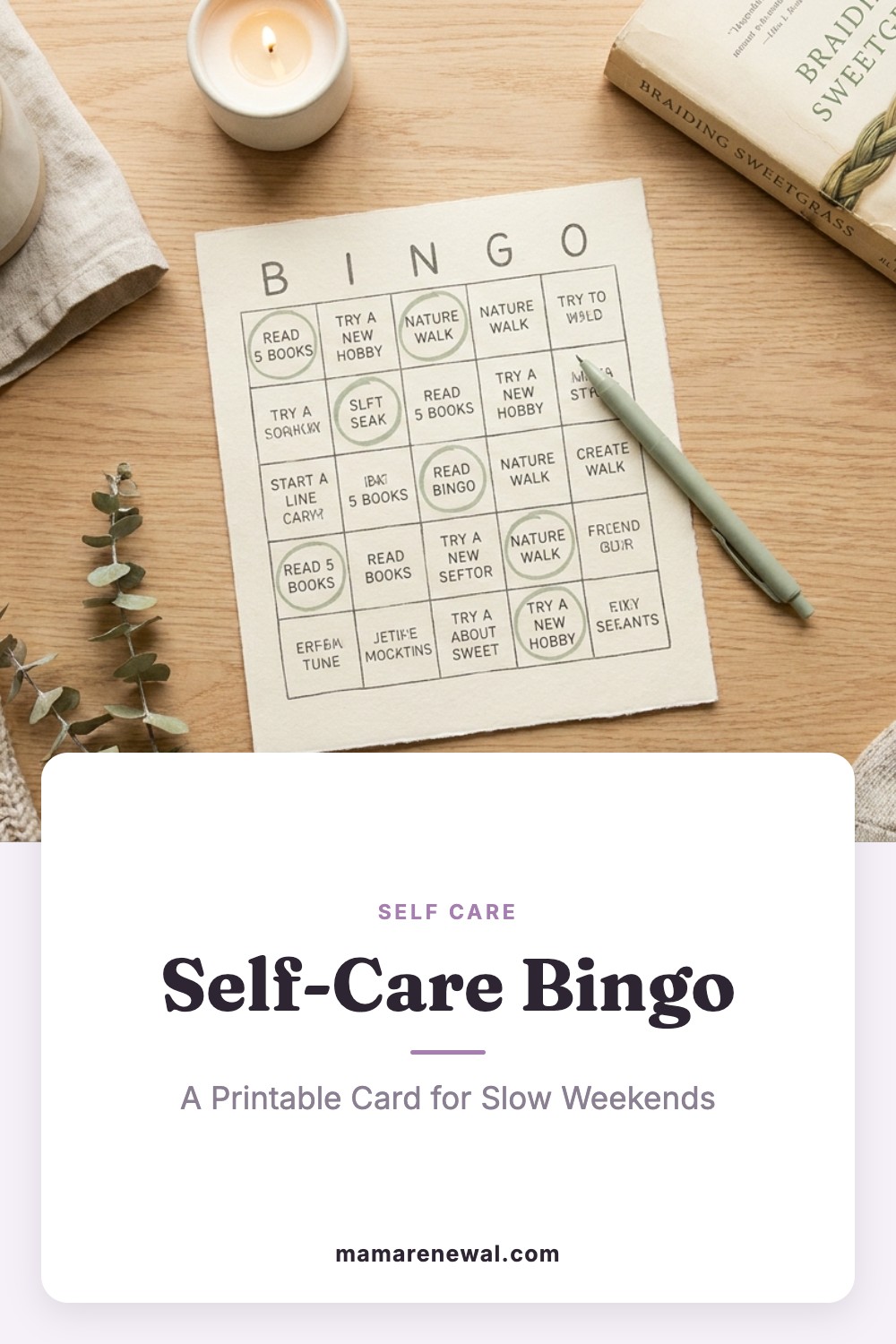
- Turn self-care into a game with a printable 5×5 Bingo card for slow weekends.
- Use 2-, 5-, and 10-minute squares to fit self-care into the time you actually have.
- Embrace partial credit and flexible rules; even a single marked square is a win.
- The center square is always free, reminding you that rest counts as self-care.
- Avoid self-judgment; any self-care you do is progress, not a measure of your worth.
This post contains affiliate links. As an Amazon Associate I earn from qualifying purchases.
Last October I had one open Saturday and a vague plan for a bath, a book and a walk. By 4 p.m. I’d done none of it and felt guilty about the “wasted” day. The problem wasn’t me. I’d turned self-care into an assignment with no rules and no finish line.
This page is a 5×5 self-care bingo card for slow weekends, with 2-, 5- and 10-minute squares so you can win with the time you really have. Below you’ll find the card, the rules, a sample Saturday, 30 swap-in squares, and a printable version (The Self-Care Menu + 30-Day Bingo) you can mark with a pen.
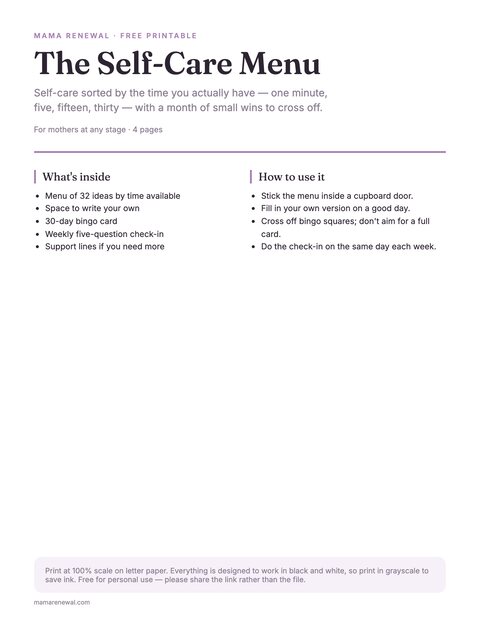
Free printable · 6 pages
The Self-Care Menu + 30-Day Bingo
Self-care sorted by the time you actually have — one minute, five, fifteen, thirty — with a month of small wins to cross off.
Free. Your download link appears right here. You'll also join the Mama Reset. Unsubscribe anytime. Privacy
In this article (15 sections)
- Why a Game Works When a To-Do List Doesn’t
- How to Play Self-Care Bingo (The Rules)
- The Card: A 5×5 Self-Care Bingo Board
- What Each Square Is Actually Doing
- A Sample Slow Weekend With the Card
- How to Get a Bingo (Strategies That Aren’t Cheating)
- Build Your Own Card: 30 Swap-In Squares
- Turn It Into a Self-Care Challenge
- Playing With Others
- When the Weekend Isn’t Slow At All
- What If Self-Care Feels Impossible Right Now?
- Finding Squares That Fit You
- Common Mistakes (and Gentle Fixes)
- Frequently Asked Questions
- One Square at a Time
Why a Game Works When a To-Do List Doesn’t
Most self-care advice arrives as a list of shoulds. Take a bath. Journal. Meditate. Move your body. Drink more water. Sleep eight hours. For a mom who already carries the household schedule in her head, a list like that is just another job. The mental load is a big reason moms feel exhausted even when everyone “helps.”
A game changes the feel of the same actions in a few ways.
- There’s no wrong order. A to-do list implies priority. Bingo says: pick whatever sounds good right now.
- Partial credit counts. Four squares marked feels like progress. Four of ten list items done feels like failure.
- Choice replaces obligation. You get to pick which square you want. That small bit of autonomy matters, because moms spend most of their day doing what someone else needs next.
- The finish line is visible. A card fits on one page. You can see the whole thing, which makes it feel doable.
- It’s allowed to be a little silly. Self-care that feels earnest and heavy often gets abandoned. Self-care that feels like a game with stickers (or a ballpoint pen) is easier to come back to.
None of this is magic. Marking a square doesn’t fix burnout, and a card can’t replace sleep, help, or real support. What it does is lower the activation energy for small acts of kindness toward yourself, and small acts repeated are most of what self-care actually is.
How to Play Self-Care Bingo (The Rules)
Keep the rules light. If they get complicated, you’ve rebuilt the to-do list.
- Pick your card. Use the card below or make your own with the swap list later in this post.
- Mark a square when you do it. Circle it, cross it out, or put a dot. A pen works, but so does a highlighter or your thumbnail if you’re reading on your phone and tracking in your head.
- Any square, any order. Nobody is checking.
- The center is FREE. It’s already yours. Resting counts.
- Five in a row wins. Across, down, or diagonal. But you don’t have to stop there: a full card is “blackout,” and a single marked square is still a square.
- Partial credit is real. If you did the 10-minute walk for 6 minutes, mark it. Done-ish beats perfect.
- Interruptions don’t void a square. If a kid needs a snack halfway through your hot drink, you can still count the drink.
TipThe center FREE square means rest counts. Two marked squares is a good weekend.
The One Rule That Matters Most
You can’t use the card to judge yourself. If you finish the weekend with two squares marked, that’s two more than “nothing,” and it tells you something useful about your weekend, not about your worth. We’ll come back to that.
The Card: A 5×5 Self-Care Bingo Board
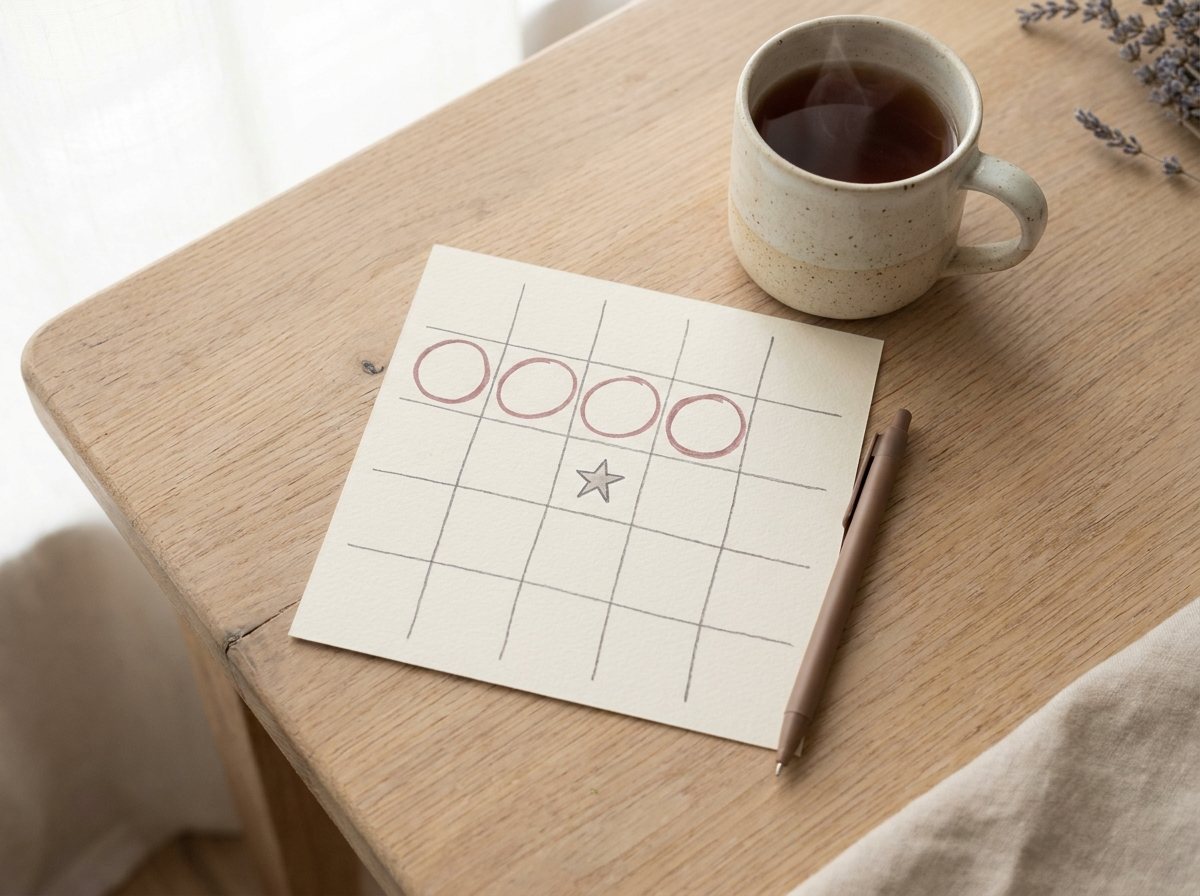
The number in parentheses is the minutes each square takes (2, 5, or 10). There are 7 two-minute squares, 9 five-minute squares, and 8 ten-minute squares, plus the free space. That mix is on purpose: on a chaotic weekend you can win using only the quick squares, and on a calm one you can go for the longer ones.
The table below is the quick-look version. For a card you can print and mark with a pen, use the printable version, The Self-Care Menu + 30-Day Bingo, which also has room to write in your own swap squares.
| B | I | N | G | O |
|---|---|---|---|---|
| Drink a full glass of water, sitting down (2) | Step outside and look at the sky (2) | Walk for 10 minutes, phone in your pocket (10) | Play one song and listen to the whole thing (5) | Stretch your neck and shoulders (5) |
| Make a hot drink and drink it while it’s hot (5) | Text a friend “thinking of you” (2) | Wash your face and moisturize slowly (5) | Sit in the car for 5 minutes before going inside (5) | Write three sentences in a notebook (5) |
| Eat something with protein before noon (5) | Read 10 pages of a real book (10) | FREE (rest counts) | Take a shower without rushing (10) | Lie on the floor with your legs up on the couch (5) |
| Mute one group chat for the weekend (2) | Light a candle or lamp (2) | Clear one surface so it looks nice (5) | Take a bath or foot soak (10) | Do something you loved as a kid: color, puzzle, build (10) |
| Take three slow breaths (2) | Say no to one thing (2) | Put your phone in another room for 10 minutes (10) | Make one thing you actually want to eat (10) | Go to bed 15 minutes early (10) |
A Quick Tally Sheet
If you like numbers, here’s a way to see how your weekend went without turning it into a grade.
| Tier | Squares on the card | Squares I marked |
|---|---|---|
| 2-minute | 7 | ___ |
| 5-minute | 9 | ___ |
| 10-minute | 8 | ___ |
| Lines of five | up to 12 | ___ |
There’s no passing score. The tally is just a way to notice patterns. If you mark mostly 2-minute squares, that’s information about the shape of your weekend, and it’s a good thing to know.
What Each Square Is Actually Doing
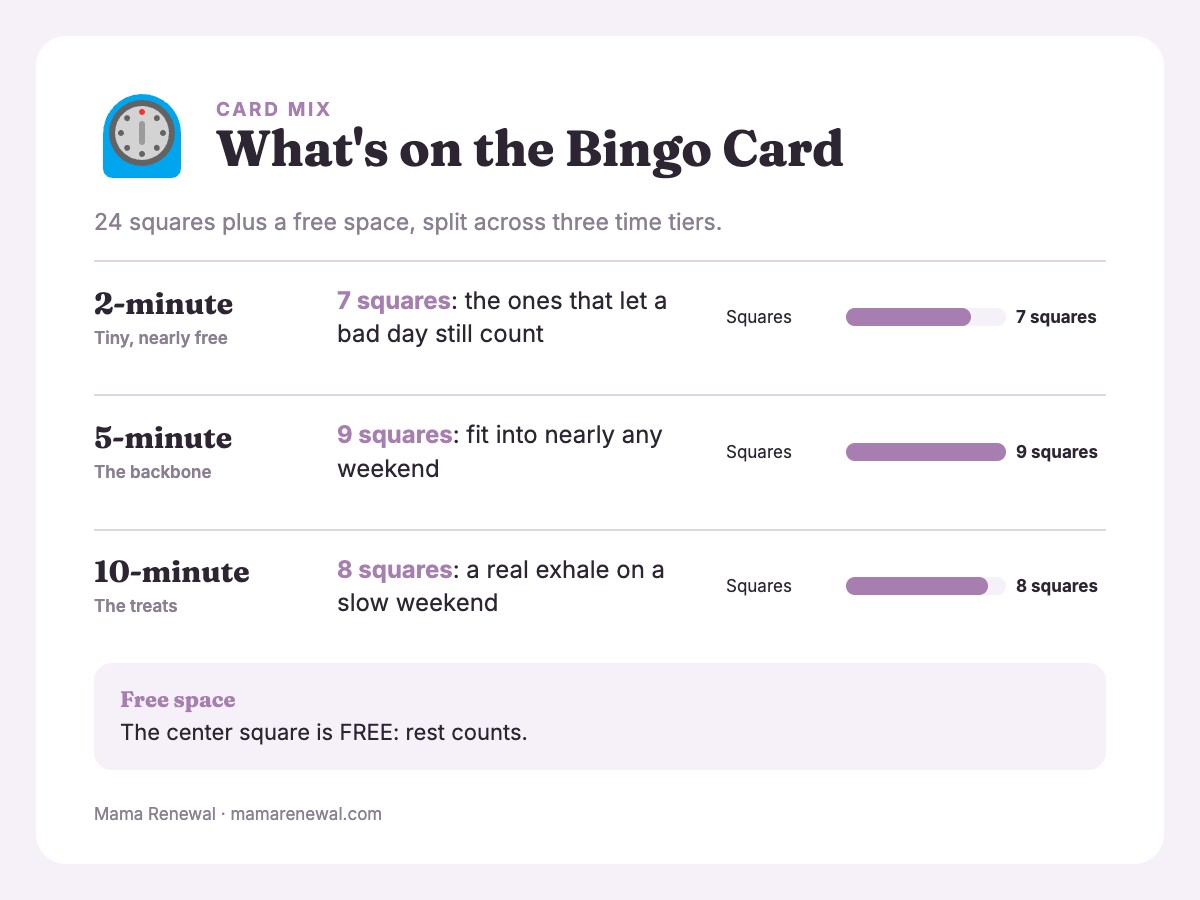
Every square on the card is there for a reason. Here’s the logic, so you can tweak things for your own life.
The 2-Minute Squares: Tiny, Nearly Free
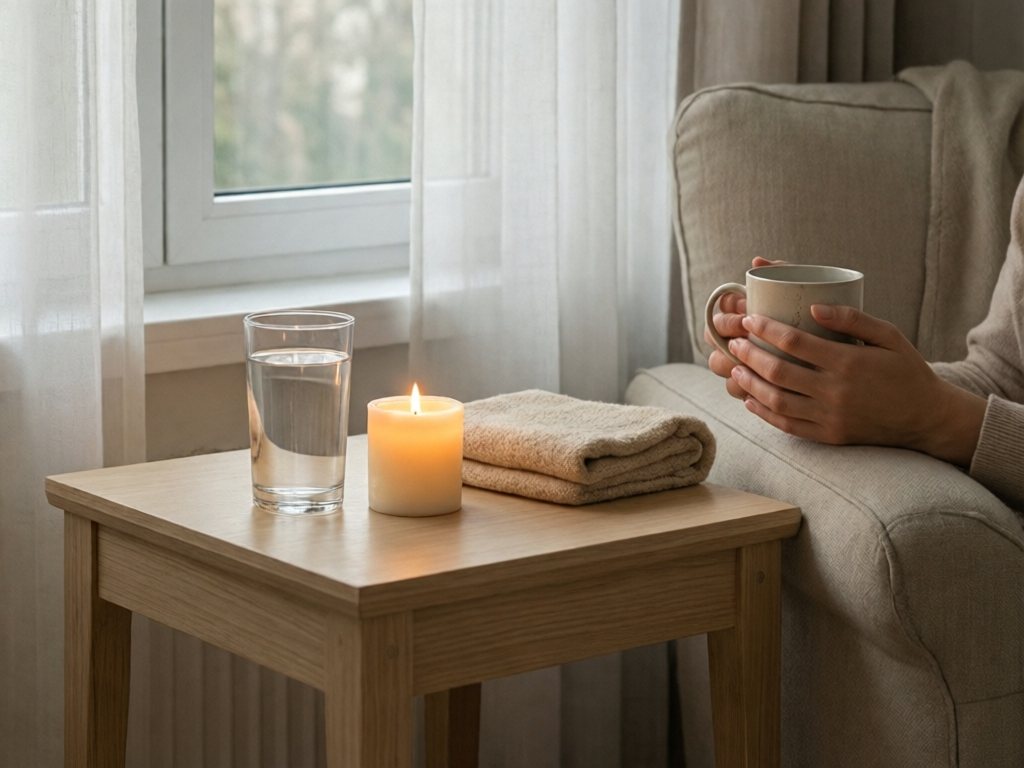
These are the squares you can do while a toddler is mid-meltdown in the next room (okay, maybe after). They exist so that a bad day still counts.
- Water, sitting down. Most of us drink standing at the counter while doing something else. Sitting for two minutes is the point. It’s the smallest possible pause.
- Look at the sky. A couple of minutes outside can help you feel a bit more settled. If it’s pouring, stand at a window.
- Text a friend. You don’t need a conversation, just a signal that you’re connected to someone. “Thinking of you, no need to answer” is enough.
- Mute a group chat. Muting for the weekend is a boundary that costs nothing.
- Light a candle. A flameless candle, a lamp or a string of lights works best. It’s a signal that the pace is changing.
- Three slow breaths. The exhale longer than the inhale. This is the most underrated square.
- Say no to one thing. The weekend square that stretches people most. If this one feels hard, these scripts for saying no can help you find words, and you can start with something truly small, like declining a favor you’d resent.
The 5-Minute Squares: The Backbone
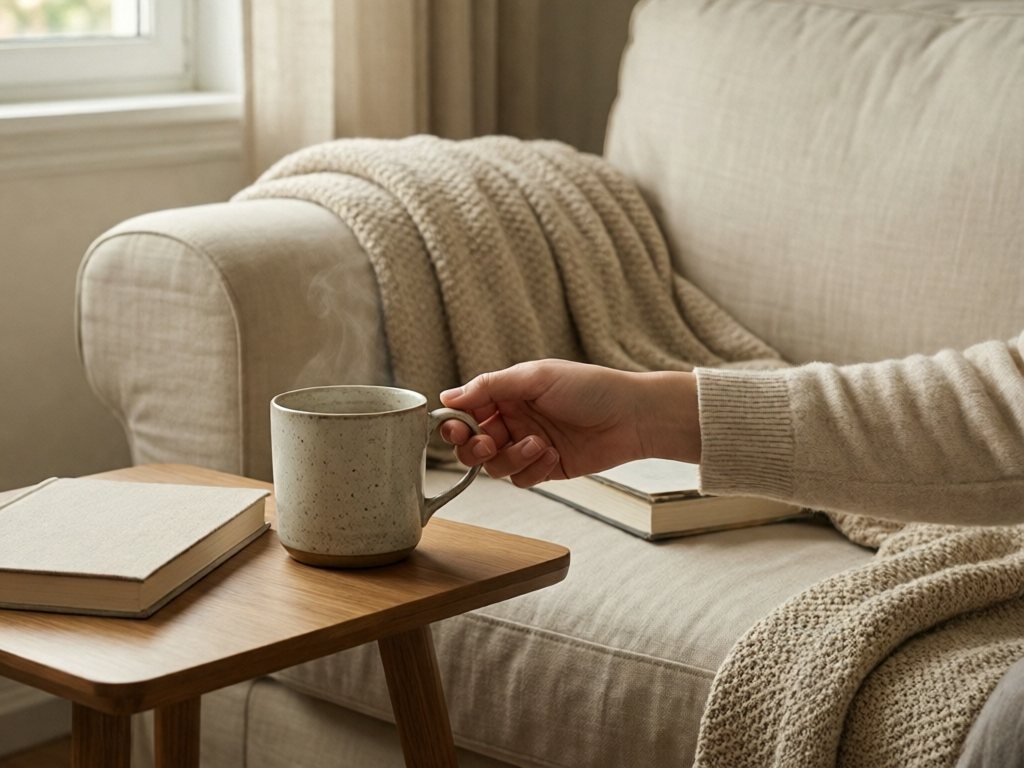
These are the squares that do most of the work. Five minutes fits in nearly any weekend, even a busy one.
- A hot drink, hot. If you’ve ever reheated the same coffee three times, you know why this is on the card.
- Wash and moisturize slowly. Not a skincare routine, just attention.
- Sit in the car for 5 minutes. One of my favorites. Do it when another adult has the kids, or after drop-off. Engine off, never in a closed garage, and never with children left in or out of the car.
- Write three sentences. Not a journal entry. Three sentences. “Today I felt…” is enough.
- Protein before noon. Part self-care, part biology: low blood sugar makes everything feel harder, and many of us skip breakfast.
- Legs up the couch. Lie on the floor, legs on the cushions. It’s weirdly restorative and takes zero skill.
- Clear one surface. One counter, one nightstand. Not a clean-the-house project, just one spot that looks calm when you walk by.
- Stretch. Neck, shoulders, wrists. We hold so much tension in the same places.
- One whole song. In a household full of noise, listening to something start to finish is rarer than it should be.
The 10-Minute Squares: The Treats
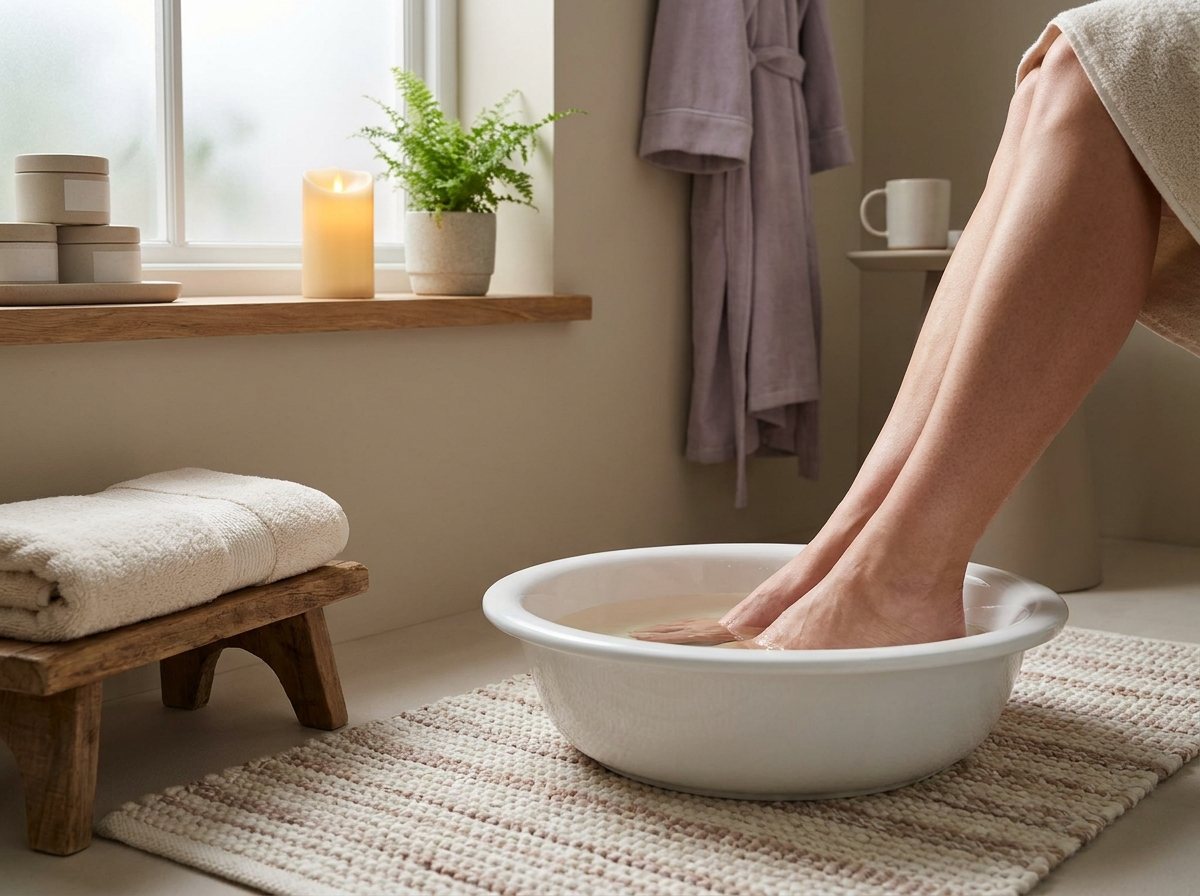
You’ll only get to some of these on a slow weekend, and that’s the point. They’re the squares that feel like a real exhale.
- Walk for 10 minutes, phone away. The no-phone part is what changes it from errand to rest.
- Read 10 pages. A real book, not articles on your phone. Ten pages takes about 10-15 minutes.
- Take a shower without rushing. No mental list, no counting down. If someone else can handle the kids for ten minutes, ask.
- Bath or foot soak. If you hate baths, the foot soak is the loophole. Warm water, a bowl, a towel.
- Do a kid thing. Color, puzzle, play with clay, build with blocks. Something with your hands that has no output.
- Phone in another room. It sounds simple, and it’s the hardest one on the board for many of us. If doom scrolling is your late-night habit, this guide to breaking the phone habit pairs well with this square.
- Make something you want to eat. Not what the kids will eat, what you want. Even toast with the good butter counts.
- Bed 15 minutes early. The only square you can’t do until the evening, and often the most valuable.
The Free Space
In the center, “rest counts.” If you spend twenty minutes staring out a window or lying on the bed, you get a square. This is the permission slip people need most. A game that includes “do nothing” as a legitimate move is a game that respects how tired you are.
A Sample Slow Weekend With the Card
Here’s what it might look like for a mom with two kids and a mostly open weekend. This is an example, not a prescription.
Saturday
| Time | What happens | Square marked |
|---|---|---|
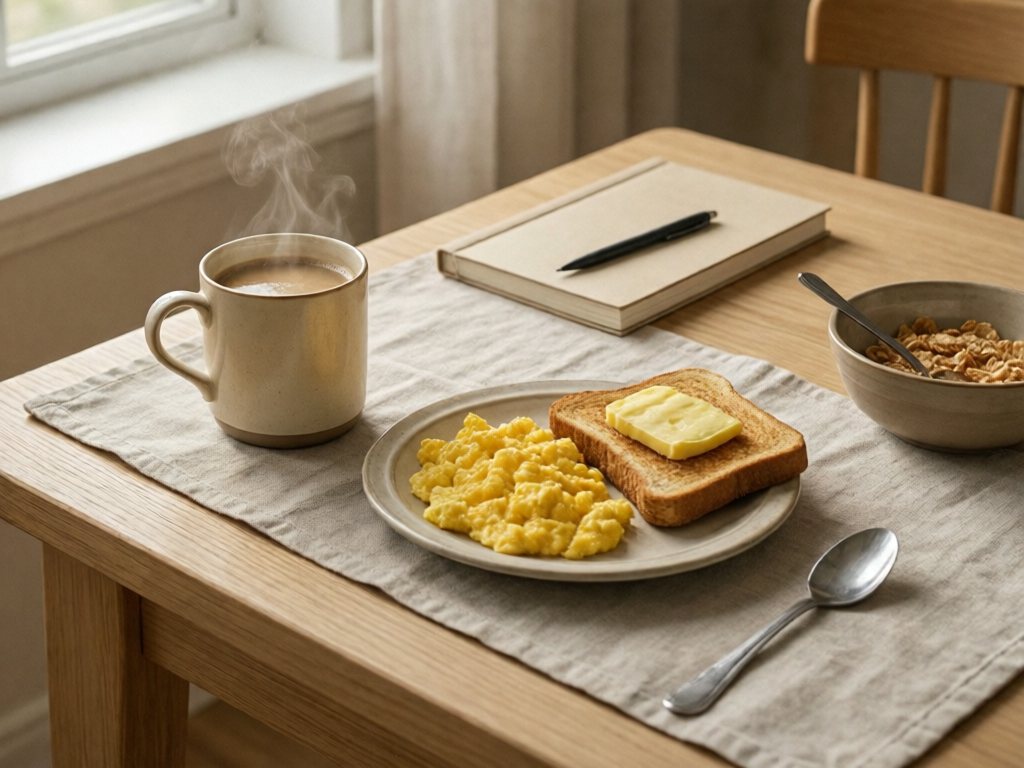
| 7:30 a.m. | Hot coffee while the kids eat cereal, actually drunk hot | Hot drink (5) |
| 8:00 a.m. | Eggs and toast before the morning rush | Protein before noon (5) |
| 10:30 a.m. | Park trip; 3 minutes standing on the grass looking up | Look at the sky (2) |
| 1:00 p.m. | Quiet time starts and the kids are playing safely nearby with the door open; one song on a speaker, no headphones | One whole song (5) |
| 1:15 p.m. | Ten pages of a novel while the kids play nearby, within earshot | Read 10 pages (10) |
| 5:30 p.m. | Sit in the driveway after the grocery run, once another adult has the kids (engine off, not in a closed garage) | Sit in the car (5) |
| 9:15 p.m. | Light a flameless candle (or a lamp), three slow breaths | Candle (2) + Breaths (2) |
Safety firstKeep real candles out of reach of kids and pets, never leave one burning unattended, and blow it out before bed (a flameless candle or lamp is the easy default). Never leave children alone in or near a car. Use headphones, or just one earbud, only when another adult is watching the kids.
That’s eight squares in one day, and almost none of it took special planning. Notice the pattern: most of the squares were attached to something already happening.
If that appeals to you, habit stacking for moms goes deeper on piggybacking self-care onto routines you already have.
Sunday
Sunday might be quieter and softer. A bath after dinner, or the “say no” square when someone asks for a favor. It might also be a day where you only mark the FREE space because you were sick or the kids were fighting. That’s fine. Three of seven days last month looked like that for me.
Want more structure for the day before the week restarts? The self-care Sunday routine walks through a gentle sequence you can overlay on the card. Sunday gets a shape without becoming a project.
How to Get a Bingo (Strategies That Aren’t Cheating)
Yes, there are strategies. The cheerful kind.
- The quick line. Pick a row or column that’s mostly 2- and 5-minute squares. On the card above, the top row mixes one 10-minute square and the rest short ones. Complete it on a busy day and you’ve got a win.
- The diagonal. Diagonals cross different parts of the card, so they take a mix of tiers. A diagonal with the free space is only four squares of effort.
- Habit pairing. Match squares to things you already do: hot drink with morning coffee, the sky square with taking out the trash, three slow breaths in the car line.
- Front-load the easy ones. Marking two squares on Saturday morning builds momentum.
- Save a 10-minute square for the afternoon slump. Most of us hit a wall between 2 and 4 p.m. A walk or a few pages can reset the day.
- Pick one scary square. Maybe it’s “say no” or “phone in another room.” Choose one that stretches you a little, but only one.
What Winning Looks Like
A bingo is five squares in a line, but honestly the better win condition is ending the weekend feeling slightly less depleted than you started. If you got there with three squares, you won.
Build Your Own Card: 30 Swap-In Squares
The card above is a starting point. Your life isn’t mine. If you work weekends, have a newborn, live in a tiny apartment, or hate candles, swap squares out. Here’s a menu to choose from, organized by time. Pick a few from each tier and make a card in your notes app.
2-Minute Swaps
- Put on lip balm or hand cream you actually like
- Open a window and take a deep breath
- Pet the dog or cat on purpose
- Send a voice memo to a friend
- Put on a cozy sweater or socks
- Unsubscribe from one email list
- Stretch your wrists and hands
- Hold your coffee mug in both hands and notice the warmth
- Look at one photo that makes you smile
- Say something kind to yourself in the mirror, even if it feels cheesy
5-Minute Swaps
- Dance in the kitchen to one song
- Do a short stretch routine (gentle morning stretches for moms can give you ideas)
- Prep a snack plate you can graze from
- Step onto the porch with a blanket
- Jot down a to-do brain dump so it’s out of your head
- Water the plants
- Browse a library holds list and pick one book
- Do a face mask or hand massage
- Sort one drawer or one pile of mail
- Sit and eat a piece of fruit with no distractions
10-Minute Swaps
- Take a walk around the block
- Call a friend or relative you actually like
- Do a puzzle or crossword
- Make a playlist for the week
- Try a short yoga video
- Bake something simple, like a batch of cookies from a mix
- Journal with a prompt (journaling prompts for moms are a good place to start)
- Sit with a cup of tea and do nothing
- Take a nap, even a short one
- Change into clean pajamas early and get under a blanket
Squares for Specific Seasons of Motherhood
| Your situation | Squares that fit |
|---|---|
| Newborn stage | Eat a real meal sitting down (5), drink water while feeding (2), lie flat for 5 minutes while someone holds the baby (5), step outside with the baby (10) |
| Toddlers | Take 2 minutes alone in the bathroom while another adult has the kids, or when they’re safely contained (2), snack stash for yourself (5), one earbud or headphones only while another adult is watching the kids (10), early bedtime (10) |
| School-age | Sit in the car after drop-off, kids already inside school, engine off (5), skip one activity this week (2), mute the class chat (2), eat lunch without your phone (10) |
| Tweens and teens | Read a book near them without conversation (10), take a walk alone (10), let a mess sit (2), say no to a carpool request (2) |
| Working weekends | Pick one 5-minute square per shift, shower at a gentle pace (10), pack a snack you’ll like (5) |
| Solo parenting | Pre-plan one pocket of rest, text a friend (2), use a movie to buy a 10-minute break (10) |
You can make the whole card fit your life. The point isn’t the specific squares. It’s having a menu that makes it easy to choose.
Turn It Into a Self-Care Challenge
If you like a little structure beyond one weekend, bingo works nicely as a month-long self-care challenge. Keep the format light: one card per weekend, four weekends.
The Four-Weekend Challenge
| Weekend | Focus | Goal |
|---|---|---|
| Weekend 1 | Notice | Mark any 5 squares. Just see what you gravitate toward. |
| Weekend 2 | Repeat | Redo your two favorite squares and add one new one. |
| Weekend 3 | Stretch | Pick one square that feels uncomfortable and try it. |
| Weekend 4 | Choose | Build your own card from the swap list and play it. |
By the end you’ll know your own patterns: which squares you skip, which feel good, and which ones you wish had more time. That’s real information. You’re doing a loose self-experiment, and the result is a custom list of things that actually help you.
Adding a Little Reward
Some people like rewards. If that’s you, great. Keep it kind: a favorite treat, a new notebook, a few minutes of a show you like. Avoid anything that makes the game feel like a diet or a race. The reward for taking care of yourself shouldn’t be something you have to earn by being productive.
Don’t Let the Challenge Become a Chore
If the card starts to feel like homework, stop. Tear it up. Self-care that adds to your guilt is just another weight. The test is simple: does playing this make me feel a little lighter, or a little more pressured? If it’s the second, change the rules or put it away.
Playing With Others
Bingo is a game, and games are better with other people, though solo works just as well.
- With a partner. Print two cards, or share one. Trade off who gets a 10-minute square while the other covers the kids. Treat it as a way to ask for time without having to negotiate from scratch.
- With a friend. Text each other when you mark a square. “Got my walk in!” is a tiny, warm check-in. It’s also an easy way to start the kind of friendship where you can say “I’m struggling.”
- With a mom group. Everyone makes a card, and you share which squares you’re picking. It makes self-care feel normal and shared, not like a luxury you have to hide.
- With the kids. A kid-friendly version works too: a card with squares like “go outside,” “read a book,” “draw,” “help make a snack.” Let them play alongside you. They watch how you treat your own needs, and that matters.
If you’re the one who always plans everything for everyone, handing a card to your partner and saying “this is my list for the weekend” can be a very clear, very gentle request.
When the Weekend Isn’t Slow At All
Not every weekend is slow. Sometimes there’s a birthday party, a sick kid, a family obligation, a visiting relative. Here’s how to play a low-battery version.
The Minimum Game
On a packed weekend, aim for just the 2-minute squares. Seven of them are on the card. Marking three over a whole weekend still counts as showing up for yourself.
Three quick ones, like water, sky, and breaths, take six minutes total. For more ideas that fit in the cracks of a busy day, see micro self-care for busy moms.
The Sick-Kid Version
When someone is throwing up, nobody is walking around the block. The FREE square and the 2-minute squares are your allies. Drink the water, say no to anything optional, and mark the bed-early square when you finally get it.
The Holiday Version
The holiday season makes weekends crowded and loud. If in-laws, schedules and gift stress are coming, pair the card with boundaries with in-laws.
Squares like “say no to one thing” and “sit in the car” (with the kids in someone else’s care) help most. Sometimes the best square is the car.
What If Self-Care Feels Impossible Right Now?
A bingo card is a gentle tool, and it’s honest to say it isn’t enough for everything. Maybe you’ve been running on empty for months. Maybe you’re snapping at your kids and then crying about it, or getting through the day feels like pushing a boulder. You may be dealing with something bigger than a lack of bath time.
Burnout, depression, anxiety, and postpartum mood changes aren’t fixed by squares on a card. If any of this sounds familiar, please talk to your doctor, a therapist, or a trusted person. Reading about depleted mother syndrome or mom burnout recovery (or browsing other Mama Renewal guides) can help you recognize patterns, and tools like this card can be a small supportive layer, but they sit alongside real help, not in place of it.
A few signs it’s time to reach out:
- You feel numb or hopeless most days for more than two weeks
- You can’t sleep even when you have the chance, or you’re sleeping far too much
- You have scary thoughts about harming yourself or others
- You feel disconnected from your baby or kids and it isn’t lifting
- Everyday tasks feel impossible
Safety firstIf you’re thinking about harming yourself or your baby, or you’re in immediate danger, call 911 or call/text 988 right now. The National Maternal Mental Health Hotline (1-833-852-6262, call or text, free, 24/7) is there for pregnant and postpartum moms. Postpartum symptoms can start any time in the first year.
If you’re elsewhere, local emergency services or crisis lines can help. You don’t have to wait until it’s bad enough.
Finding Squares That Fit You
One reason self-care advice fails is that it’s one-size-fits-all. A bubble bath is bliss for one mom and torture for another. If you’ve been rolling your eyes at the squares so far, your style might just be different. A short quiz can point you toward what actually restores you: the self-care style quiz sorts you into a style, and you can use your result to rewrite the card around things you’ll really enjoy.
For example:
- If you recharge through quiet and solitude, load the card with reading, baths, and phone-away squares.
- If you recharge through connection, load it with calls, texts, and coffee dates.
- If you recharge through movement, favor walks, stretches, and dancing.
- If you recharge through creativity, add coloring, journaling, baking, and building squares.
The card is a framework. Your style is the filling.
Common Mistakes (and Gentle Fixes)
| Mistake | Why it happens | Gentle fix |
|---|---|---|
| Treating the card like a checklist to complete | Habit of being productive | Remind yourself: two squares is plenty, blackout isn’t the goal |
| Skipping the free square | Guilt about resting | Use it first, on purpose |
| Picking only 10-minute squares | Wanting a “real” break | Mix in short ones so you always have a win |
| Waiting for the perfect moment | Perfectionism | Mark partial credit, do 6 minutes instead of 10 |
| Feeling bad about unmarked squares | Comparing to an ideal | Use it as data, not a grade |
| Doing it all alone, in secret | Mom guilt | Tell one person, ask for one 10-minute cover |
| Making the card too long or complicated | Overplanning | Keep it at 25 squares, simple language |
Frequently Asked Questions
What is self-care bingo?
Self-care bingo is a game that turns small acts of self-care into squares on a 5×5 card. You mark a square each time you do one, and five in a row is a bingo. The point is to make self-care feel like a low-pressure game, not another to-do list, so you can pick whatever fits your time and energy.
How do I use the self-care game printable on this page?
Use the printable version, The Self-Care Menu + 30-Day Bingo, and mark squares with a pen as you do them. The on-page table is the quick-look version. The printable has room to write in your own squares from the swap lists to build your own card.
What if I only have five minutes all weekend?
That’s exactly why the card mixes 2-, 5-, and 10-minute squares. With five minutes you can mark a couple of 2-minute squares, like drinking a glass of water sitting down and taking three slow breaths, or one 5-minute square, like a hot drink or a few stretches. A small win still counts, and the free space is there for days when resting is the whole plan.
Is a self-care challenge a good idea if I’m already burned out?
It can be, as long as you keep it gentle and optional. Start with the 2-minute squares and treat the card as a menu, not a requirement. If marking squares starts to add pressure or guilt, put it down. And if exhaustion, hopelessness, or irritability have lasted for weeks, talk to your doctor or a therapist, because a bingo card is a small support, not a treatment.
What are some good self-care ideas for weekends with kids at home?
Look for squares that fit into the gaps: a hot drink during breakfast, a song during quiet time, three slow breaths in the car, ten pages of a book while the kids play. Attaching self-care to things you’re already doing makes it far more likely to happen. If you have a partner or helper, trade off covering a 10-minute square for each other.
Can I make my own self-care bingo card?
Yes, and you should. Pick 24 squares you’d actually enjoy, mixing quick, medium, and longer ones, and put a free space in the middle. Use the swap-in lists above for ideas, and tailor them to your stage of motherhood, your budget, and what really restores you. If you’re not sure what that is, a self-care style quiz can help you figure it out.
What if I don’t mark any squares?
Nothing happens, and nothing is wrong with you. Some weekends are survival mode. Look at what got in the way: was the card too ambitious, was the weekend too packed, were you sick or overwhelmed? Use that to adjust next time, maybe by relying on only the 2-minute squares, and give yourself the free space for this one.
One Square at a Time
If you take one thing from this post, let it be this: you don’t have to earn rest, and you don’t have to do it perfectly. A glass of water, a song, a few breaths, ten pages of a book. These are small things, and small things add up when you let them.
This weekend, print the card or copy it into your notes, pick one square that sounds good, and mark it. Then maybe another. If you land on a bingo, great. If you land on a nap, even better.